San Diego sellers can reach active cash buyers and off-market buyer lists right now, and the safest, fastest route to them runs through a verified, agent-backed off-market program rather than an unvetted cash-buyer solicitation. Local demand from investors and move-in-ready buyers is real and steady. The sections below walk through vetting steps, realistic timelines, and what to prepare before you take an offer.
TL;DR:
- Before sharing financial details, verify business registration, a staffed office, and bank confirmed proof of funds; route earnest money through licensed escrow.
- Run a 7 to 14 day off market test; if no qualified offer emerges, shift to an agent managed listing.
- Once a qualified buyer and escrow are confirmed, a cash sale can close in 7 to 21 days; traditional listings often take weeks or months.
- Local inventory sits at 2 to 3 months of supply, and homes average 30 to 45 days on market; compare carrying costs with cash certainty.
- Take a cash offer when speed and certainty outweigh a modest price gap; seek competitive bidding for well kept homes in high demand areas.
Table of Contents
- What “buyers in waiting” means in San Diego and where they come from
- How to vet cash buyers and buyer lists in San Diego
- Step-by-step: reaching buyers in waiting as a San Diego seller
- How the Premier Selling System connects sellers to buyers in waiting
- Pricing trade-offs: speed versus net proceeds in San Diego
- Agent perspective: why a verified local route reduces risk
- Get started: request a fast home analysis or off-market plan
- FAQ
- Sources
What “buyers in waiting” means in San Diego and where they come from
“Buyers in waiting” refers to active cash buyers, investors, and pre-qualified house hunters who want to move on a property before it hits the open market. In San Diego, this pool comes from a few recurring sources:
- Investor networks buying fix-and-flip or rental properties in specific ZIP codes.
- Agent-managed buyer databases built from past showings, inquiries, and referrals.
- Off-market or “coming soon” listings shared quietly among agents and their buyer pools.
- Informal local groups and social posts where buyers post standing requests for certain neighborhoods.
Supply varies block by block. A Clairemont fixer might draw three investor offers in a week, while a renovated North Park bungalow attracts owner-occupant buyers willing to wait for a full marketing push. Bay Ho and similar starter-home pockets tend to see the fastest off-market turnover. Speed is worth a lower price mainly when you are facing a tight relocation deadline, probate timeline, or a property that needs more repair than you want to finance.
How to vet cash buyers and buyer lists in San Diego
Not every “we buy houses” contact is legitimate, and the risk is not hypothetical — understanding common cash buyer scams and red flags can help protect homeowners. The FTC has sued operators running deceptive mortgage assistance and fake local business schemes aimed at homeowners, and a detailed FTC complaint documents a company that built thousands of fake local listings, routed calls through numbers outside the country, and manufactured fake reviews.
Statistic Callout: The FTC’s Premium Home Service complaint details fabricated local business profiles and misleading reviews used specifically to deceive homeowners, a pattern worth checking for before you share property or financial details.
Run this checklist before accepting any cash offer:
- Confirm the buyer’s business registration and a real, staffed physical office, not just a phone number.
- Request a notarized proof-of-funds letter or direct bank verification, not a screenshot.
- Check local business history and look past star ratings for verifiable, dated reviews.
- Walk away from anyone who asks for an upfront “processing” or “administrative” fee.
- Insist on a written escrow and closing plan naming a licensed title or escrow company.
Red flags mirror what federal regulators have already prosecuted: listings with no verifiable address, reviews that all appeared in the same short window, and pressure to wire money before escrow opens. You can cross-check ownership and parcel details directly through the San Diego County Assessor’s mapping services, which lists parcel maps and recorder contact information for anyone verifying a property or a company’s claimed address.
Pro Tip: Ask any cash buyer to wire their earnest deposit directly to a California-licensed escrow company, never to the buying company itself.
An agent typically runs these same checks independently: verifying proof of funds with the buyer’s bank, pulling a title search to confirm there are no liens, and coordinating escrow instructions so funds move through a licensed third party instead of directly between buyer and seller.
Step-by-step: reaching buyers in waiting as a San Diego seller
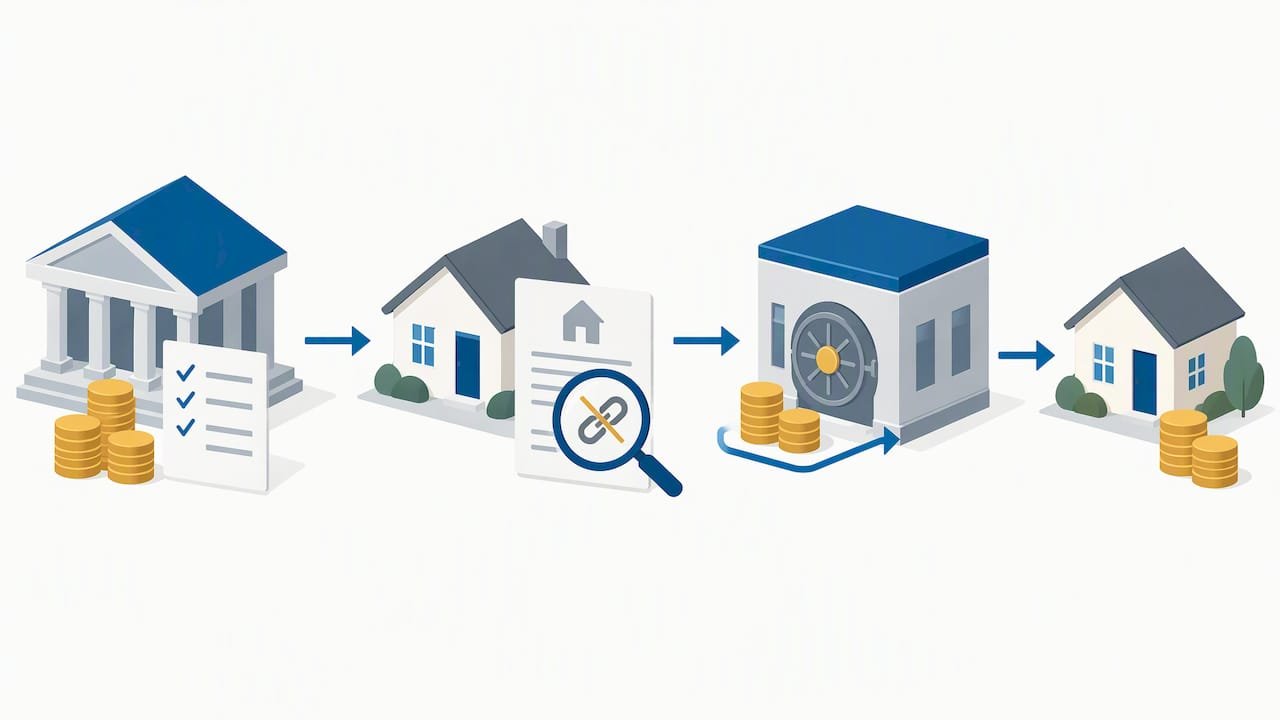
Here is the sequence that gets a vetted buyer to a closed sale without unnecessary delay:
- Put together a concise property packet: recent photos, square footage, upgrades, and any disclosures.
- Run a soft-market or off-market test for 7 to 14 days to gauge real interest before committing to a full MLS listing.
- Send targeted outreach to vetted buyers and investor contacts who match the property type.
- Collect proof of funds and confirm escrow instructions before negotiating final terms.
- Negotiate price and terms, then pick a closing timeline that fits your situation.
Before any of this starts, gather:
- The deed and current mortgage payoff statement.
- HOA documents, if applicable.
- A copy of the tenant lease, if the property is occupied.
- Recent utility bills and any prior inspection reports.
Timelines differ sharply by path. An expedited cash close can finish in 7 to 21 days once a buyer is verified and escrow instructions are set. A traditional agent listing, by contrast, often runs from several weeks to a few months depending on pricing and market conditions, as outlined in our guide to selling fast in San Diego. If the off-market test produces no qualified offer within that first window, that is your signal to call an agent and move to a managed listing strategy, which typically includes a short coming-soon period before the property appears on MLS, as detailed in our off-market testing approach.
How the Premier Selling System connects sellers to buyers in waiting
Our Premier Selling System is built around the same logic as a private off-market test, but run through a verified buyer database and strategic pricing rather than an open call for cash offers. We tap an existing pool of pre-qualified buyers, run targeted marketing through tools like Zillow Showcase, and coordinate the paperwork so a seller never has to verify a stranger’s funds alone.
We claim this system delivers:
- Sale prices averaging higher than comparable listings.
- A typical close around 78 days for homes in the $1.25 million to $1.5 million band.
- A structured multi-step coming-soon plan before a property goes fully public.
Every buyer who comes through this process is verified the same way an independent agent would verify them: proof of funds confirmed, escrow instructions set with a licensed company, and title checked before contingencies are removed.
Pro Tip: If you inherited a property, are relocating on a deadline, or are selling a rental with tenants in place, an agent-managed off-market test is usually the fastest route that still protects your proceeds.
Pricing trade-offs: speed versus net proceeds in San Diego
A faster close almost always comes with some discount, but the size of that discount depends heavily on condition, local demand, and how many buyers are competing for the property. A property in a high-demand pocket with multiple interested buyers can often avoid a steep price cut even on a quick timeline.
Statistic Callout: Local market analysis shows San Diego inventory has normalized toward 2 to 3 months of supply with average days on market in the 30 to 45 day range, a more balanced environment than the extremes of 2020 and 2021.
Cash offers typically skip loan contingencies and appraisal gaps, which can lower closing costs and shorten the timeline, while financed offers sometimes bring a higher price that offsets a longer close, a trade-off we break down further in our cash versus financed offers guide. To compare net proceeds, line up:
- Expected sale price for a quick cash close versus a marketed listing.
- Closing costs and any concessions each buyer type typically expects.
- The carrying costs (mortgage, taxes, insurance) you’d pay during a longer listing period.
Accept a cash offer when certainty and speed outweigh a modest price gap. Push for competitive bidding when your property is in strong shape and sits in a submarket with active buyer demand.
Agent perspective: why a verified local route reduces risk
We have seen the same pattern play out across San Diego neighborhoods: sellers who skip verification to save a few days often lose more in price or peace of mind than they gain in speed. A verified off-market process costs almost nothing extra in time but closes the door on fake listings, routed phone scams, and buyers who can’t actually fund a deal.
The protections that matter most are simple: proof of funds confirmed before contingencies drop, escrow run through a licensed company, and title checked early. Readers can see how this plays out in practice in our seller case material linked throughout this guide.
— Ryan Case
Get started: request a fast home analysis or off-market plan
If you want to reach verified buyers in waiting without gambling on an unvetted cash offer, we offer a few paths depending on how hands-on you want to be.

- Premier Selling System: our full off-market-to-market strategy with buyer database access and strategic pricing.
- Full Service Listing: traditional representation with complete marketing and negotiation support.
- Guaranteed Sale Program: a structured path for sellers who need certainty on timing.
Pricing for each option is available on request based on your property and goals. For sellers worried specifically about buyer legitimacy, our four-step cash buyer verification check walks through exactly what we confirm before any offer moves forward, and homeowners dealing with a tenant-occupied property should also review our rental sale guidance before listing.
Request a free home analysis or start a 7 to 14 day off-market test through Ryancaserealtor and we’ll walk you through which option fits your timeline.
FAQ
Is it a good time to buy a home in San Diego?
Market conditions depend heavily on your submarket and timeline, but local analysis shows inventory has normalized to a more balanced 2 to 3 month supply compared with the tight conditions of 2020 and 2021. Buyers with stable financing and a multi-year horizon are generally in a stronger position than those trying to time a short-term move.
What is the 3-3-3 rule for buying a house?
Definitions of budgeting guidelines vary across sources, so it’s best treated as a rough planning heuristic rather than a fixed rule.
What is the hardest month to sell a house?
Winter months, particularly December, tend to be the slowest for traditional listings nationally because buyer traffic drops during the holidays. In San Diego’s milder climate, the effect is less pronounced than in colder markets, but activity still typically picks back up by late January and February.
How can I find the owner of a property in San Diego County?
You can look up parcel and ownership records directly through the San Diego County Assessor’s mapping resources, which provide parcel maps and recorder contact details either online or in person. These same records are useful for verifying a buyer’s claimed address before accepting an offer.
Sources
- FTC sues to stop deceptive mortgage assistance and fake local business schemes
- San Diego County Assessor — Mapping Services
- Buy now vs wait: San Diego County decisions