Who pays for a home warranty is negotiable, and sellers often cover it as a closing concession that transfers to the buyer once the sale closes. Many providers, including American Home Shield, offer separate listing-period coverage for sellers that converts into the buyer’s one-year term at closing. These plans are service contracts, not insurance, so caps and exclusions still apply.
TL;DR:
- Annual premiums typically range from $360 to $1,200, depending on plan tier, home size, and region; buyers and sellers can split costs by agreement.
- The buyer’s term generally starts at closing, not contract signing, so confirm the activation date, transfer rules, and registration steps with the provider.
- A warranty does not replace an inspection or seller disclosures; known preexisting problems, cosmetic damage, code upgrades, and specialty components are often excluded.
- Each claim carries a service fee or deductible, and plans impose payout caps; listing period limits may differ from the buyer’s term, so compare contracts.
Table of Contents
- Who Pays: Negotiation, Closing Concessions, and Typical Costs
- How Transferability and Timing Work During a Sale
- Seller Benefits: Why Sellers Include Warranties and When It Helps
- Buyer Benefits and Practical Limitations of a Transferred Warranty
- What Home Warranties Typically Cover and Common Exclusions
- How to Add or Transfer a Warranty in a Real Estate Deal
- Agent Perspective: Why a Seller-Paid Warranty Gets Recommended
- What Actually Matters When Weighing a Home Warranty
- How a Listing Agent Handles Warranties for Sellers
- FAQ
- Sources
Who Pays: Negotiation, Closing Concessions, and Typical Costs
Home warranty costs are fully negotiable, and they usually show up on the closing statement as a seller concession rather than a separate upfront bill. Sellers often pay for a buyer policy to make an offer more appealing, but the cost can also land on the buyer or get split between both sides in the purchase agreement.
A few common arrangements show up again and again in real transactions:
- The seller pays for a policy that starts protecting the buyer at closing.
- The buyer purchases their own plan separately, outside the seller’s negotiation.
- Both parties split the premium as part of the final agreed terms.
Annual premiums typically fall between $360 and $1,200, depending on the plan tier, home size, and region. Many sellers prefer to defer payment until closing since it avoids an upfront cost and gives the buyer tangible reassurance that the deal includes protection for major systems.
How Transferability and Timing Work During a Sale
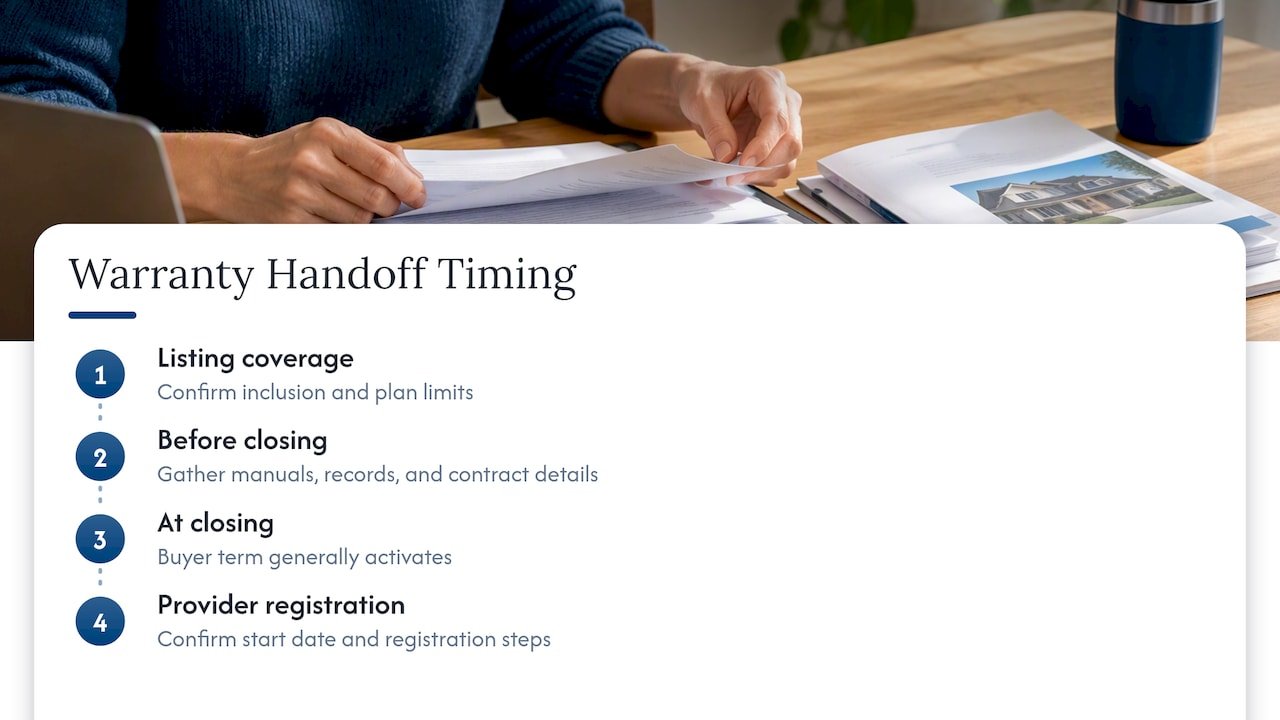
Some providers sell a two-phase product: coverage that protects the seller while the home sits on the market, followed by a buyer term that begins once the sale closes. American Home Shield is a well-known example of a provider offering this kind of seller coverage option, though cheaper plans sometimes skip the listing-period protection entirely, so it is worth confirming inclusion before counting on it.
The buyer’s term generally activates at closing, not at contract signing, so both sides should confirm the exact start date and registration steps with the provider rather than assuming coverage is automatic. Sellers should also gather appliance manuals, service records, and the warranty contract details ahead of time, since these documents speed up registration and prevent coverage gaps. Checking for any caps or shorter limits tied to the listing-period plan avoids surprises if something breaks before closing.
Seller Benefits: Why Sellers Include Warranties and When It Helps
Offering a warranty can make a listing stand out and give buyers a reason to move forward instead of renegotiating after an inspection turns up minor issues. Sellers often use these plans strategically as a liability shield, limiting their exposure to repair costs that surface while the home is actively marketed.
A few practical angles worth considering:
- Including a warranty in the listing description signals confidence and can reduce buyer hesitation over older systems or appliances.
- Listing-period coverage limits what a seller pays out of pocket if something breaks before the home sells.
- Referencing the warranty during negotiations can help hold the agreed price instead of conceding a discount after inspection.
Buyer Benefits and Practical Limitations of a Transferred Warranty
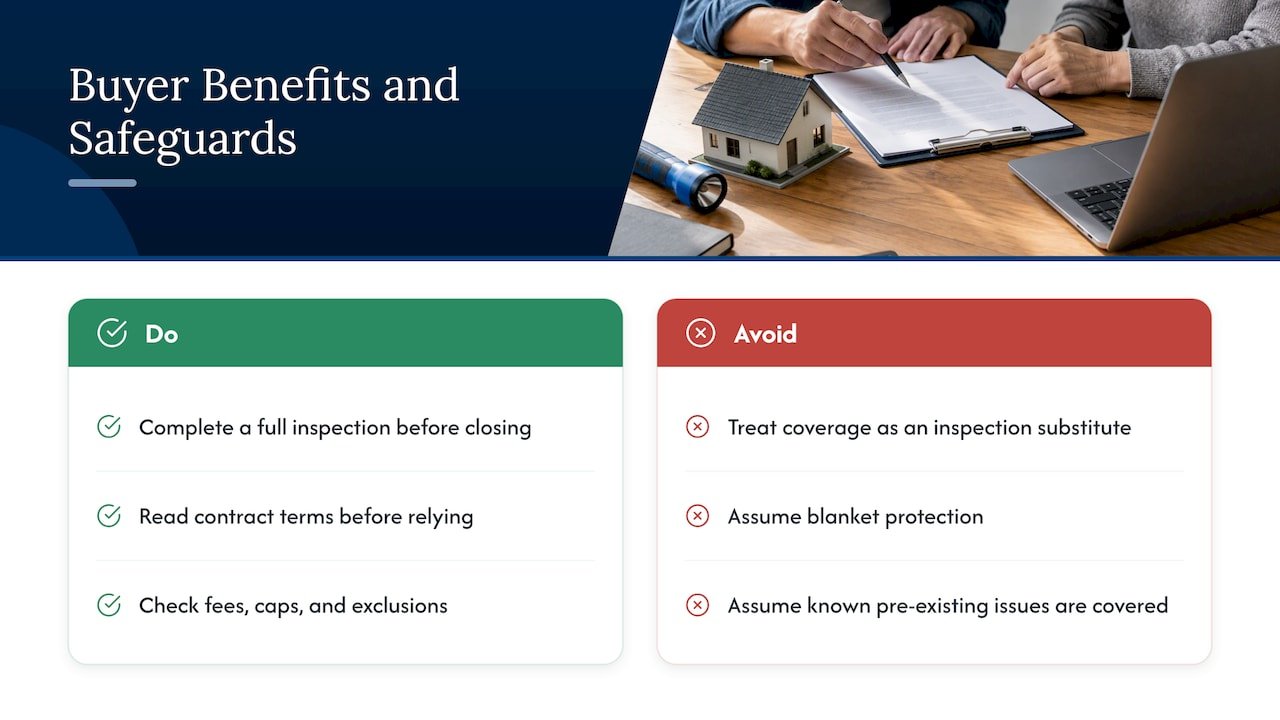
For buyers, a transferred warranty offers budget predictability right after moving in and quick access to repair technicians instead of scrambling to find one on short notice. That can matter after moving in, when an unexpected furnace or water heater failure can strain a new homeowner’s finances.
The coverage is not a substitute for a home inspection, and it does not replace the seller’s disclosure obligations. Warranties typically exclude pre-existing problems the seller already knew about, so buyers still need a full inspection before closing. Service fees, coverage caps, and exclusions can all narrow what actually gets paid out, which is why reading the contract terms before relying on the plan matters more than assuming blanket protection.
What Home Warranties Typically Cover and Common Exclusions
Most plans bundle coverage for the systems and appliances that fail most often and cost the most to replace.
- Heating and cooling systems, including furnaces and air conditioning units.
- Electrical and plumbing systems throughout the home.
- Water heaters and major kitchen appliances like ovens, dishwashers, and refrigerators.
Exclusions tend to follow a predictable pattern: pre-existing conditions, cosmetic damage, code-required upgrades, and certain specialty components are usually left out. Every claim also comes with a service fee or deductible, and the overall plan has a payout cap, both of which are worth confirming before a seller advertises the warranty or a buyer counts on it. Seller listing-period coverage may have different caps from the buyer’s term, so the two phases are not necessarily identical in scope.
How to Add or Transfer a Warranty in a Real Estate Deal
Getting a warranty into a transaction cleanly takes a few deliberate steps rather than leaving it to chance.
- Sellers request quotes from a few providers and confirm whether listing-period coverage is included or needs to be added separately.
- Sellers add the plan name, provider, and payment terms directly into the listing and the purchase contract language.
- Sellers plan to pay at closing when possible, since it keeps the cost out of upfront expenses.
- Buyers confirm the transferability clause and the exact activation date before relying on the coverage.
- Buyers request the plan documents and registration instructions so there is no lapse between closing and active coverage.
- Both sides verify the service fee amount and payout caps so expectations match the actual contract.
A seller handoff folder should include appliance manuals, service records, the warranty contract ID, and the provider’s contact information, matching the seller handoff checklist many real estate professionals follow.
Pro Tip: When writing the warranty into an offer or counteroffer, name the provider, the plan tier, and who pays directly in the contract language instead of leaving it as a verbal understanding.
Agent Perspective: Why a Seller-Paid Warranty Gets Recommended
Agents often lean on seller-paid warranties because they cut down on post-inspection haggling. When a buyer knows a system issue found during inspection will be covered rather than renegotiated, deals tend to stay on track more easily. A warranty is a negotiation tool, not a disclosure shortcut: inspections and full disclosure of known defects still apply regardless of whether a warranty is in place. Part of managing the transaction well means documenting transfer instructions clearly and making sure the buyer actually receives registration details at handoff, not just a mention that coverage exists.
What Actually Matters When Weighing a Home Warranty
The conventional advice treats a home warranty like a simple yes-or-no checkbox on a listing sheet, and that undersells how it actually functions in a deal. The real value is not the appliance coverage itself, it is the way a seller-paid plan defuses tension during the inspection period, when minor issues can otherwise turn into price renegotiations that derail momentum.
Buyers tend to overrate what the policy covers and underrate the service fees and caps that come with each claim. Sellers tend to underrate how much a modest warranty cost can offset a far larger price concession down the line. If there is one priority worth acting on first, it is this: read the actual contract terms, caps, and exclusions before either side treats the warranty as a selling point or a safety net. Everything else, including who pays, is a negotiation detail that follows from that understanding.
— Ryan Case
How a Listing Agent Handles Warranties for Sellers
Negotiating a warranty into a deal is one more detail on top of pricing, marketing, and buyer vetting, which is exactly why we handle it as part of listing a home with us. We get quotes, confirm listing-period coverage, write the terms into the contract, and manage the buyer handoff so nothing slips through at closing.

Our seller services, including the Premier Selling System, Full Service Listing, and Limited Listing options, fold warranty negotiation into the broader strategy we build around pricing data. If repairs come up first, a pre-listing inspection can help decide whether to fix an issue or offer a warranty to cover it instead.
- We request and compare warranty quotes before a home ever hits the market.
- We write seller concession terms directly into the listing and purchase contract.
- We manage the buyer handoff so registration and activation happen without delay.
Ready to talk through your options? Reach out about our listing services and we will walk through what fits your sale.
FAQ
Are home warranty plans a rip-off?
Home warranties are service contracts with set coverage limits, service fees, and exclusions, not a guarantee that every repair gets paid in full. Whether a plan is worth it depends on the home’s age, system condition, and the specific contract terms, so reading the caps and exclusions before buying matters more than a blanket judgment.
How would you explain the difference between a buyer and a seller warranty?
A seller’s warranty typically covers the home during the listing period, protecting the seller from repair costs while the home is on the market. The buyer’s warranty is usually a separate one-year term that activates at closing, and many providers bundle both phases into one purchase.
Are home warranties transferable?
Yes, many home warranty plans are designed to transfer from seller to buyer at closing, with the seller’s listing-period coverage converting into the buyer’s new term. Confirming the transferability clause and activation date with the provider avoids any gap in coverage.
What are reps and warranties in real estate?
Representations and warranties are statements a seller makes about a property’s condition, ownership, and disclosures, separate from a home warranty service contract. They relate to legal disclosure obligations rather than the appliance and systems coverage a home warranty plan provides.
Sources
- Who Pays For A Home Warranty: Buyers or Sellers? – Forbes Advisor
- Home Warranty for sellers: Benefits, use cases and when to offer one
- Consumer Guide: Seller Handoff Checklist