An FHA offer and a conventional offer can show the same price and still carry different risk for you as the seller. The loan type changes how the home gets appraised, which repairs may be required before closing, and how much leverage you have if the value comes in low. Neither is automatically better. The right choice depends on your home’s condition, the strength of the buyer’s lender and how much price you gain or lose.
TL;DR
- Conventional offers usually carry less deal risk for sellers. FHA offers can be just as solid when the home is in good repair and the lender is responsive.
- FHA appraisals apply minimum property standards, so health, safety and structural defects may need fixing before closing. Conventional appraisals focus mainly on market value.
- FHA buyers get an amendatory clause that protects their deposit if the appraisal is low, which weakens your position in a value dispute.
- Compare offers by net proceeds and likelihood of closing, not headline price alone.
- A pre-listing inspection and a clear counteroffer plan take most of the surprise out of an FHA offer.
Table of Contents
- What the loan type means for you as the seller
- How the two offers compare on the points that affect you
- The four seller risks with an FHA offer
- Where FHA offers hold up well
- What the buyer pays, and why it matters to your offer
- How to compare two offers on paper
- Countering an FHA offer
- Our perspective
- Get the offer comparison done before you list
- FAQ
- Sources
What the loan type means for you as the seller
You never pay the buyer’s loan costs, so it may seem the financing type is not your concern. It is, because the loan decides who inspects your house, what that person can demand, and how likely the sale is to reach the closing table.
FHA loans are insured by the Federal Housing Administration and built for buyers with smaller down payments or lower credit scores. Conventional loans are not backed by the federal government. According to Wells Fargo, FHA loans suit borrowers with lower credit scores or smaller down payments, while conventional loans tend to suit borrowers with stronger credit and savings.
That difference in buyer profile is why sellers often read FHA as the riskier route. It is a generalization, and a useful one to test against the facts of your own listing.
How the two offers compare on the points that affect you
| Factor | FHA offer | Conventional offer |
|---|---|---|
| Minimum down payment | 3.5% with a 580+ score | As low as 3% for eligible borrowers |
| Typical minimum credit score | 580 for the 3.5% down tier, lower with 10% down | 620 for the 3% down program |
| Property standards | Minimum property standards; repairs may be required before closing | Appraisal focuses mainly on market value |
| Low-appraisal protection for buyer | Mandatory amendatory clause | No mandatory clause; negotiated in the contract |
| Appraisal follows the home | Yes, for 180 days | No |
| Seller perception | Often seen as higher risk | Often seen as cleaner |
Lender minimums are floors. Individual lenders can set higher ones, so a buyer’s pre-approval letter tells you more than the program’s published rules.
The four seller risks with an FHA offer
1. Repairs required before closing
This is the one that surprises sellers most. According to LegalClarity, FHA minimum property standards mean health, safety and structural problems, such as peeling paint in pre-1978 homes, broken windows or missing handrails, must be fixed before closing. A conventional buyer can usually buy the home as-is and handle repairs afterward.
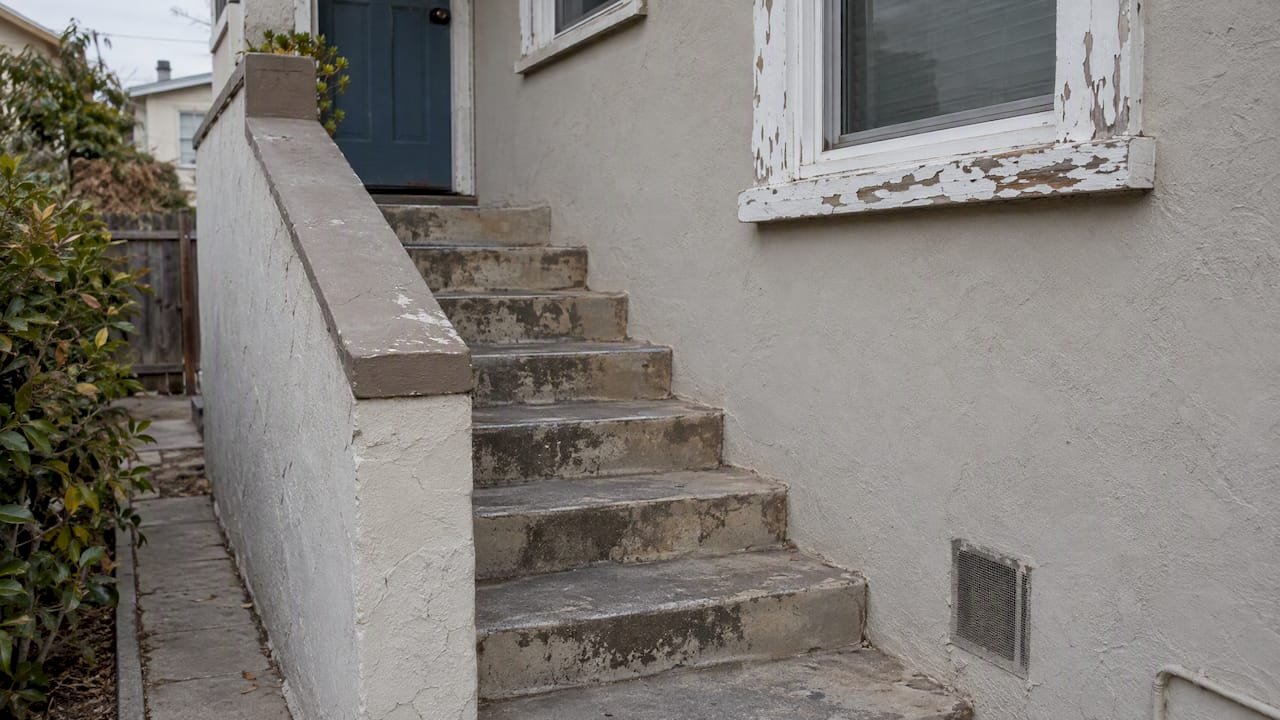
If your home was built before 1978, has deferred maintenance, or has an older roof, deck or stairway, expect the appraiser to notice. Fixing items mid-escrow costs time, and time is the one thing a 30 to 45 day escrow does not have to spare. Our week-by-week escrow timeline for California shows how little slack there is.
2. The amendatory clause
When a home appraises below the contract price, an FHA buyer is protected by the amendatory clause. LegalClarity explains that it protects the buyer’s earnest money if the value comes in low, which hands you less leverage. With a conventional offer, the appraisal-gap terms are whatever the contract says, so you can negotiate them from the start.
3. A low appraisal that sticks
Per the same source, an FHA appraisal is tied to the property for 180 days. If the deal fails on a low value, the next FHA buyer inherits that number. Conventional appraisals do not follow the home, so the next buyer’s lender starts fresh.
4. Perceived financing risk
Sellers and listing agents often assume FHA files are slower or more likely to fall apart. The Mortgage Reports notes that this perception owes a lot to historical processing times and extra scrutiny of older or neglected homes, and that a strong, communicative lender can move an FHA file as quickly as a conventional one. The lender matters more than the label.
Where FHA offers hold up well
Do not dismiss an FHA offer by reflex. In many cases it is the stronger one.
- Your home is in good repair. If there is nothing for the appraiser to flag, the minimum property standards cost you little.
- The price is higher. A buyer using FHA may be able to pay more, because the structure lowers the cash they need up front. If the net after any repairs beats the conventional offer, the math wins.
- Your price sits in a narrow band. FHA has loan limits. The most common 2026 floor is $541,287 in most areas, but San Diego County is a high-cost area. One local lender reports a 2026 high-balance FHA limit of $1,104,000 for a single-unit property here, so many San Diego homes fit under it.
- The buyer’s lender is responsive. Ask for the pre-approval letter and the loan officer’s contact details before you counter.
An FHA buyer can also finance a multi-unit property of up to four units, which opens your sale to owner-occupants who might otherwise not consider a duplex or fourplex.
What the buyer pays, and why it matters to your offer
FHA buyers pay mortgage insurance premiums. NerdWallet reports an upfront premium of 1.75% of the base loan amount, plus annual premiums of roughly 55 to 105 basis points depending on loan-to-value and term. With less than 10% down, the annual premium lasts for the life of the loan. Conventional loans require private mortgage insurance only below 20% down, and it can be canceled once equity reaches 20%.
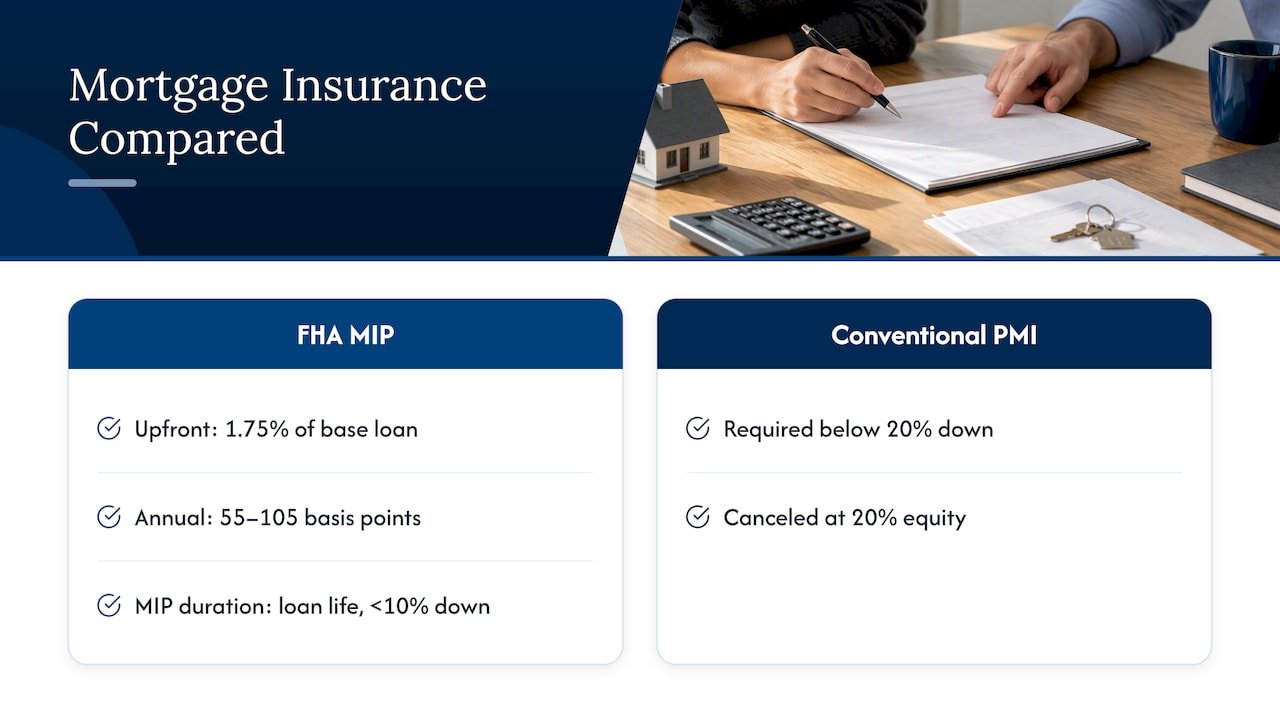
That is the buyer’s cost, not yours. It still shapes the offers you see. A buyer who must watch every monthly dollar has less room to absorb an appraisal gap or a repair credit. If you want the long-run comparison, this breakdown of PMI versus MIP over five and ten years shows how the two insurance types diverge, which helps explain why buyers lean one way or the other.
How to compare two offers on paper
Headline price is the first number, not the deciding one. Build a simple net sheet for each offer.
- Start with the price. Write down the contract price.
- Subtract likely repair costs. For an FHA offer, estimate what the appraiser might require. A pre-listing inspection can give you real numbers instead of guesses.
- Subtract concessions. Note any seller credits requested for closing costs.
- Weigh the odds of closing. Ask what happens to your timeline and your price if the file falls through. Fall-through costs carrying expenses and may reset your days on market.
- Check the cushion. Look at earnest money, appraisal-gap language, inspection period and the loan contingency removal date.
A conventional offer $5,000 lower with fewer conditions can beat a higher FHA offer that needs a $9,000 repair list and a longer timeline. The reverse is also true. For a wider look at when financing beats speed, see our guide to financed versus cash offers, and use net proceeds math to choose between as-is and repairs.
Countering an FHA offer
You are not stuck with the terms as written. Common counter moves include:
- Shorten the inspection and contingency windows and ask for higher earnest money, as we outline in our seller counteroffer strategy.
- Set a repair cap. Agree to fix items the appraiser requires up to a stated dollar amount, with the buyer deciding beyond it.
- Ask for proof of lender strength. A pre-approval from a lender with a track record is worth more than an online pre-qualification.
- Address the appraisal gap in writing. An FHA buyer cannot be forced to cover a gap, but you can decide in advance whether you will cut the price, split the difference or walk. Our guide to low appraisal options for sellers has the scripts.
- Fix known issues before listing. Peeling paint, loose railings and broken windows are cheap compared with a failed escrow.
On the buyer side, the equivalent tools are covered in our pieces on appraisal gap options and escalation clauses, which help you understand what the other side is allowed to offer.
Our perspective
We see sellers lose leverage not because they picked the wrong loan type, but because they learned about it too late. The FHA repair list that arrives on day 18 of escrow is the same list that could have been found in week one before listing.
Our approach starts with pricing and preparation, because that is where the numbers are decided. We look at the home’s age and condition before we choose how to market it. If an older property is likely to draw FHA buyers, we plan the repairs, the disclosure package and the counter strategy in advance, so no offer type catches us off guard. We also do not treat FHA buyers as lesser. They are part of a broad buyer pool, and a broad pool is what supports a stronger price. The goal is to welcome every qualified buyer and be ready for what each one’s financing brings.
The right offer is the one that nets you the most with the least risk of falling through. Sometimes that is FHA. Often it is conventional. Know your numbers before you choose.
— Ryan Case
Get the offer comparison done before you list
If you are selling in San Diego County and want to know how FHA and conventional buyers will see your home, we can walk through it with you. Our Premier Selling System and other service options are built around data-backed pricing, marketing to a large buyer database and negotiation. If you already have offers in hand, our page on strategic home pricing explains how we set a price that draws qualified buyers of every loan type.
FAQ
Do sellers prefer conventional or FHA offers?
Most sellers lean conventional because FHA appraisals apply stricter property standards and include the amendatory clause. LegalClarity points to those features as the main reasons. A well-maintained home with a well-qualified FHA buyer can still be a strong deal.
Is an FHA offer more likely to fall through?
Not necessarily. The extra risk comes from the repair requirements and the low-appraisal protections, not from the loan itself. A communicative lender and a home in good condition narrow the gap considerably.
Can I refuse to make repairs an FHA appraiser requires?
Yes, repairs are negotiable between you and the buyer. But the FHA loan generally cannot close until required items are resolved, so your choices are to fix them, share the cost, or let the buyer renegotiate or cancel under the contract’s terms. Ask your agent to review the contract language before you respond.
Does a pre-1978 home make an FHA sale harder?
It can. Peeling or chipped paint is a common flag in homes built before 1978, and it must be fixed before closing under FHA standards. Checking the exterior and window trim before you list is a low-cost way to avoid a delay.
Sources
- Why Do Sellers Prefer Conventional Over FHA Loans? (LegalClarity)
- FHA Loans: What to Know in 2026 (NerdWallet)
- FHA vs Conventional Loan, 2026 Rates and Differences (The Mortgage Reports)
- Do Home Sellers Prefer Conventional Home Loans? (The Mortgage Reports)
- FHA loan vs conventional loan: How to choose (Wells Fargo)
- San Diego County FHA Loan Limits 2026
- PMI vs MIP for Homebuyers