Judge an offer by how likely it is to close, not by price alone. Before you reply, confirm the buyer’s funds or lender approval, read every contingency and deadline, check the earnest money, and set a response deadline with your agent. Cash versus financed, appraisal risk, and inspection terms predict certainty fastest. The sections below show how to score, counter, and close.
TL;DR:
- Request proof of cash funds or lender preapproval, then score offers from 1 to 5 and double the factors tied to your priority.
- Cash removes lender approval risk, though appraisal may still matter; a financed offer can win with stronger terms than a lower cash bid.
- When a negative appraisal persisted in completed sales, 57% renegotiated to a lower price; sellers can also split the gap, offer credits, or seek reconsideration.
- When buyers need cash for closing or lower payments, a closing cost credit or rate buydown may help more than cutting the sale price.
Table of Contents
- What should you do soon after an offer arrives?
- How do you score offers beyond the headline price?
- How do you write a counteroffer that keeps the buyer at the table?
- How do you handle multiple offers without scaring buyers off?
- What can you do when the appraisal comes in below the contract price?
- When is a concession smarter than a price cut?
- How do price and timing shape your leverage?
- How should you talk to buyers during negotiation?
- What should you check before you sign or close?
- Why does an experienced listing agent change negotiation outcomes?
- A listing agent’s one rule for sellers: certainty beats a slightly higher price
- Ready to negotiate from a position of strength?
- FAQ
- Sources
What should you do soon after an offer arrives?
Speed matters, but rushed replies cost sellers leverage. Run this triage in order, ideally with your agent on the phone:
- Confirm the money. Ask for proof of funds if the buyer is paying cash, or a lender preapproval letter if they are financing. A preapproval from a real lender who can talk to your agent beats a generic prequalification printout.
- List every contingency and its date. Inspection, appraisal, loan approval, and any home-sale contingency each carry a deadline. Put them on one page so you can see where the buyer can still walk away.
- Check the earnest money. Note the amount, who holds it, and whether it becomes non-refundable after a certain date. A larger deposit that goes hard early signals a committed buyer.
- Pick your priority. Decide whether speed, price, or certainty matters most to you, and write it down before you see the next offer. Without a stated priority, a bigger number will pull you off course.
- Prepare your scripts. Have a short reply ready for each path: accept, counter, or request proof. Your agent can draft all three so you are never improvising.
- Set a response deadline. Tell the buyer’s agent when you will respond. A defined window keeps the process moving and stops the buyer from shopping other homes while they wait.
Pro Tip: Do not reject an offer outright on the first read. A weak price attached to strong terms is often a counter away from a good deal.
Once the checklist is done, you will know whether this is a deal worth protecting or one to counter hard. Our team walks sellers through this triage on every offer, and you can see our process for verifying cash buyer funds if cash is on the table.
How do you score offers beyond the headline price?
The highest number is not always the strongest offer. The National Association of REALTORS® says sellers should weigh price, financing, contingencies, earnest money, and closing timeline together, and that an agent can help rank offers against your priorities. Its guidance on multiple offers adds that higher earnest money, fewer contingencies, and quicker closings can be worth more than a slightly higher price.
Here are the dimensions to weigh:
- Price: The starting point, not the finish line. Compare it to net proceeds after concessions, not to the other offers’ headlines.
- Financing type: Cash removes the lender from the equation, though an appraisal may still be relevant. A financed offer depends on loan approval and a supporting appraisal.
- Contingencies: Every contingency is an exit door. Fewer, shorter ones mean less risk.
- Earnest money: A bigger deposit means the buyer has more to lose by backing out.
- Closing timeline: A timeline that matches your move date can be worth real money. A very fast close helps if you need speed; a flexible one helps if you need time.
- Inspection terms: A short inspection window with limited repair requests is safer than an open-ended one.
- Buyer flexibility: Willingness to accept a rent-back, a later possession date, or a limited repair list shows a buyer who wants to close.
To compare offers, give each dimension a simple score from 1 to 5, then weight the ones that match your priority. If certainty matters most, count contingencies, financing, and earnest money twice. If you need speed, double the timeline score. The totals will not make the decision for you, but they stop a flashy price from hiding a fragile deal.
Why do cash and low-contingency offers tend to win on risk? Each contingency is a point where the deal can fall apart or be renegotiated, and a financed buyer adds both a lender and an appraisal to the path. Cash buyers skip both. That does not make cash automatically better, because a financed offer with strong terms can still beat a low cash bid, and we cover that tradeoff in our guide to cash versus financed offers.
Ask your agent to verify, not assume. That means a call to the lender, a check of proof-of-funds documents, and confirmation that the earnest money is actually deposited. If you use a spreadsheet, a note app, or a tool like the private offer-comparison workflow from Nest Noted, the point is the same: one consistent scorecard for every offer so you compare like with like.
How do you write a counteroffer that keeps the buyer at the table?
A good counter pursues better terms without insulting the buyer. Pick the lever that fits your priority:
- Price counter: Move the number, and give a reason tied to comps or condition. “Recent comparable sales support a price closer to X” lands better than a bare number.
- Terms and timing counter: Adjust the closing date, possession date, or add a short rent-back so you can move on your schedule.
- Contingency counter: Shorten the inspection period, tighten the loan approval deadline, or ask for a kick-out clause if the buyer needs to sell a home first. The NAR describes a kick-out clause as a way to keep showing the property after accepting a home-sale contingent offer and remove that contingency if a better non-contingent offer appears. Our explainer on how a home sale contingency works covers the mechanics.
- Earnest money counter: Ask for a larger deposit or an earlier date when it becomes non-refundable.
- Time-limited counter: Give the counter an expiration, such as a set deadline, so it cannot sit while the buyer explores other homes.
Sample phrasing for each one:
- Price: “We appreciate the offer. Based on recent sales nearby, we can agree at [price] with the rest of your terms unchanged.”
- Timing: “Your price works. We need a [date] close and a short rent-back to line up our move.”
- Contingencies: “We can accept the inspection contingency if it is limited to 5 days from acceptance.”
- Earnest money: “To move forward, we ask that the deposit increase to [amount] by an agreed date after acceptance.”
- Deadline: “This counter is open until 5 p.m. tomorrow.”
Framing matters too. The Program on Negotiation at Harvard Law School advises that when you counter, you explain your rationale, and that rationales built on constraints you face tend to work better than ones that disparage the other side’s offer. “Our timeline requires a close by an agreed date” is a constraint. “Your offer is lowball” is a disparagement, and it usually costs you goodwill.
One legal reality to respect: a counteroffer may affect the status of the original offer, so confirm the effect with your agent or attorney, because the buyer can walk away or decline your terms. Time it carefully, put it in writing, and keep a record of every version. For a worked example with scripts, see our seller counteroffer strategy.
Pro Tip: Change as few things as you can in one counter. Each extra demand gives the buyer another reason to say no.
How do you handle multiple offers without scaring buyers off?
When several offers land at once, you have three paths:
- Accept the strongest offer outright. This works when one offer clearly beats the others on price and terms, and when it matches your priority.
- Invite best and final. Tell each buyer’s agent that you have received multiple offers and ask for their strongest terms by a set deadline.
- Counter selectively. Pick one or two offers with the most promise and counter them, keeping the others warm.
The NAR notes that telling buyers other offers exist and inviting their best terms can yield stronger final contracts, though it can also cause some buyers to walk away. That is the tradeoff: transparency can raise the ceiling, but it can also shrink the field. If one of your offers is clearly your favorite, a best-and-final round may risk more than it gains.
A simple script for inviting best and final: “We have received multiple offers. We are asking all buyers to submit their highest and best terms by 5 p.m. tomorrow. We will review everything together and respond that evening.”
When you disclose competition, say that offers exist and set a deadline. Do not share another buyer’s price or terms, since that creates a fairness problem and can sour trust. Your agent knows what disclosure is appropriate in your situation.
You may also see an escalation clause, where a buyer agrees to beat the highest competing offer by a set increment up to a cap. From the seller’s side, check that the buyer provides proof of the competing offer, that the cap is high enough to matter, and that the rest of the terms are as strong as a standalone offer. An escalation clause on a weak contract is still a weak contract. For ways to draw out stronger bids, read our tactics for winning highest and best offers, and for the buyer’s side of the table, our look at preemptive offers.
What can you do when the appraisal comes in below the contract price?
A low appraisal is one of the most common reasons a signed deal gets reopened. Research from the Federal Reserve Bank of Philadelphia found that appraisals often cluster right at the contract price, and that in completed sales where a negative appraisal persisted, 57 percent renegotiated to a lower price.
The takeaway: when an appraisal falls short, expect the conversation to turn to price, and plan your response before the report arrives.
The Consumer Financial Protection Bureau explains that a low appraisal is strong evidence the price may be above market value, that the seller may be asked to reduce the price, and that buyers may have the option to cancel under an appraisal contingency.
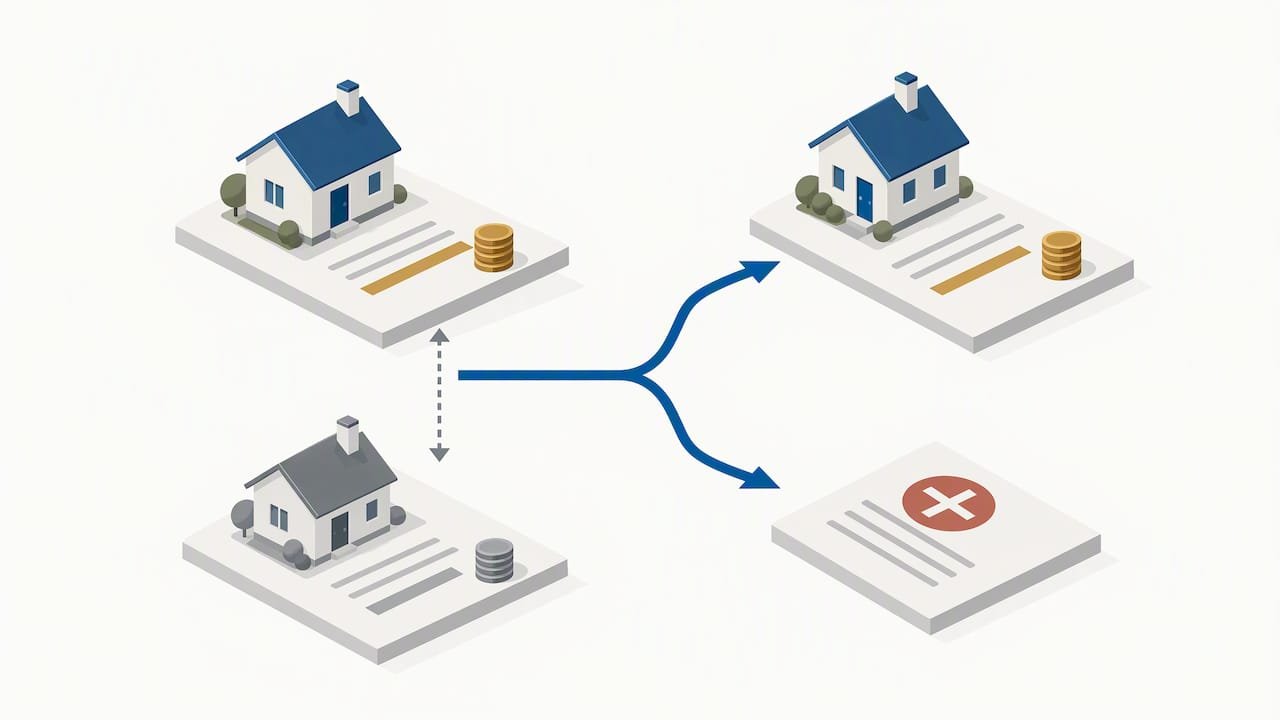
There is also a reason buyers push hard here. When the appraisal is lower than the price, the loan-to-value ratio rises, and a lender may tier its pricing or required down payment around thresholds. That “notch” gives the buyer a strong incentive to renegotiate rather than absorb the gap.
Your realistic options:
- Lower the price to the appraised value or somewhere between the two.
- Split the difference with the buyer covering part of the gap in cash.
- Offer a credit or repair concession instead of a straight price cut.
- Request a rebuttal by giving the appraiser stronger comparable sales your agent has gathered.
- Ask the buyer to waive the appraisal contingency or cover the shortfall, if they are well funded.
- Offer a temporary concession, such as a rate buydown, to bridge the gap.
A short script: “We reviewed the appraisal and believe three nearby sales were not considered. We are submitting them for reconsideration. If the value stands, we are open to discussing a shared solution so we can both close on time.”
The aim is to keep the buyer engaged while you gather evidence. Our guide on low appraisal options and agent scripts goes deeper on each path.
When is a concession smarter than a price cut?
Sellers often assume a lower price is the only way to close a gap. Concessions can solve the same problem while protecting your sale price. The NAR notes that in markets where buyers have more leverage, sellers may offer concessions such as closing-cost credits, rate buydowns, and repair credits, with rate buydowns and closing-cost credits among the most common.
Common concessions and when they help:
- Closing-cost credit: Useful when the buyer is short on cash at closing.
- Rate buydown: Helps when monthly payment is the buyer’s pain point, as in a higher-rate market.
- Repair credit: Lets the buyer handle repairs after closing instead of delaying the deal for contractor work.
- Price reduction: Best when the number itself is the obstacle or the appraisal demands it.
Here is an illustrative example. Say a buyer asks for a price reduction on a home. A $10,000 price cut lowers the recorded sale price, which can affect the comps used for future neighborhood valuations, and the buyer’s payment drops only slightly. A $10,000 credit toward closing costs or a rate buydown may do more for the buyer’s monthly budget, while the recorded price stays where you want it. Your net proceeds may look the same, but the buyer may value the credit more.
Present concessions as a package, not a surrender: “We can contribute toward your closing costs at the agreed price.” Then confirm in writing how the credit is applied, and check the final numbers at closing so it appears correctly on the settlement documents.
How do price and timing shape your leverage?
Your list price sets the tone for every negotiation that follows. Two basic approaches compete: competitive pricing, set at or just under what comparable homes support, and aspirational pricing, set higher in hope of a premium. Aspirational pricing risks fewer showings and a stale listing. The NAR’s pricing guidance explains that agents set a recommended price using comps, market conditions, home condition, and seller goals, and that sellers keep the final say.
Some experts go further and suggest pricing competitively, sometimes 3%–5% below the highest recent sale or pending sales nearby, to generate early traffic. The logic: strong early activity creates urgency, and urgency can trigger multiple offers.
What to do about timing:
- Run a short market test. Give the price a defined window to draw showings and offers.
- Reduce with purpose. If interest is weak, a well-timed cut in the 2%–5% range can renew attention. The NAR notes that a long time on market often traces back to early overpricing, and that a positioned reduction can increase showings.
- Understand days on market. The longer a home sits, the more buyers read it as a problem, and the more leverage shifts to them.
- Know what pending status does. A pending sale with a contingency can still leave room for backup offers, which is where a kick-out clause helps.
- Tie price to tactics. A price that draws activity gives you room to ask for better terms, shorter contingencies, and best-and-final rounds.
Small improvements can support your price too. Quick interior updates, like those described in this partner page on value-adding door and closet upgrades, can raise perceived value before buyers walk through. For the methodology behind pricing, see our page on data-backed strategic home pricing.
How should you talk to buyers during negotiation?
How you say something often matters as much as what you ask for. Three tactics are worth knowing.
Anchoring. The first number on the table pulls the rest of the conversation toward it. The Program on Negotiation advises making the first offer when appropriate to anchor, and framing counteroffers with clear rationales to re-anchor when the other side moves first. As a seller, your list price is your first anchor. Where it makes sense, talk by phone before committing a counter to paper, so you can read the response and adjust.
Loss framing. Negotiation experts note that emphasizing what a buyer stands to lose is often more persuasive than emphasizing gains, because people work harder to avoid a loss. “Another buyer is reviewing this home this weekend” can move a buyer more than “you could get a great house.”
Constraint, not disparagement. Explain your limits (“our lender payoff and timeline require…”), not the buyer’s flaws.
Quick dos and don’ts:
- Do keep the conversation about the home and the terms, not about the buyer.
- Do stay calm when an offer feels low. Emotional replies cost money.
- Do put every agreed change in writing, with dates.
- Don’t reply the minute an offer lands. Give yourself time to think.
- Don’t reveal your bottom line, your move deadline, or how much you need the sale.
- Don’t let a long back-and-forth with no progress drag on without a deadline.
Try to learn what drives the buyer: a school start date, a lease ending, a job relocation. Those motivations show you which terms they will trade for a better price. For more field-tested approaches, The Close’s collection of negotiation strategies covers preparation, market-value anchoring, and data-backed communication.
Pro Tip: Before any call, write down your goal, your walk-away point, and the one thing you will trade. Then stick to it when the conversation gets heated.
What should you check before you sign or close?
Surprises tend to show up late. Run this list before final signatures:
- Do the final walk-through. Confirm the home is in the agreed condition and that promised repairs were completed. The Consumer Financial Protection Bureau recommends a final walk-through and careful review of all closing documents before signing.
- Document repairs and credits. Anything agreed to verbally should appear in an addendum or on the settlement statement.
- Confirm contingencies. Make sure inspection, appraisal, and loan contingencies were formally removed or fulfilled by their deadlines. The NAR notes that contingencies should include specific timelines.
- Verify the earnest money. Check that the deposit is held where the contract says and that its status matches the agreement.
- Watch for lender changes. If the buyer’s rate or fees shift between the Loan Estimate and Closing Disclosure, the CFPB says the buyer should ask the lender for an explanation. Those changes can affect the buyer’s ability to close, so be ready to discuss timing or concessions.
- Pause if documents differ. If closing papers materially differ from what you agreed, you can slow down and ask questions. Consult your agent or an attorney before signing.
Why does an experienced listing agent change negotiation outcomes?
Negotiation is easier when the person next to you has substantial experience and has data behind each move. Our team works with sellers through the Premier Selling System, which pairs strategic pricing with targeted marketing and access to a large buyer database. We also offer a range of service levels, from paperwork-only support to full-service listing.
In negotiation, those tools translate into practical advantages. Better comparable sales support your price in appraisal and counteroffer conversations. Verified buyers reduce the risk of a fragile contract. Marketing that draws more qualified interest creates the competition that lets you ask for stronger terms. And ready-to-use scripts keep your replies calm and consistent.
If you want a personalized pricing or negotiation plan, ask us for a home analysis.
A listing agent’s one rule for sellers: certainty beats a slightly higher price
When I sit down with sellers, I steer them toward one question: which offer is most likely to actually close? The temptation is to chase the biggest number, and I understand why. But the figure on page one of a contract means little if the deal collapses at the appraisal, the loan approval, or the final walk-through and you start over weeks later with a stale listing.
My rule of thumb is simple. If two offers are close in price, take the one with the stronger buyer, the cleaner contingencies, and the larger deposit. A small price gap may be outweighed if a deal falls through and you have to relist. Certainty is worth paying for.
The second habit is preparation. Decide your priority before the first offer arrives, and write down the terms you would trade for it. Sellers who do that negotiate from a plan instead of a mood.
If you want to see where your home stands, request a home analysis and we will walk through pricing and likely buyer responses together.
— Ryan Case
Ready to negotiate from a position of strength?
You do not have to run the offer table alone. When you work with us, we put the Premier Selling System behind your sale, from pricing to the final signature. Here is what you can expect:
- A custom pricing analysis built on current comparable sales
- A negotiation plan with scripts for offers, counters, and low appraisals
- Verified buyer checks before you commit to a contract
- Options for every stage, from paperwork-only to full-service listing

Ready for your next step? Request your home analysis through our pricing page or contact us here to schedule a consultation.
FAQ
How much can you negotiate on a house?
It depends on market conditions, how long the home has been listed, and the strength of the offer. Sellers often have more room when a home draws multiple offers and less when it has sat for a long time. A well-priced home that attracts early interest gives you the strongest footing.
What are the main types of negotiation a seller will face?
Most home sales involve price negotiation, terms and timing, contingency changes, earnest money, and repair or credit requests. Each one has its own tactics, but all work best with a clear priority and written documentation. Your agent can help you decide which levers to pull first.
When is the hardest time to sell a house?
Slower stretches tend to be when fewer buyers are shopping, and your leverage shrinks in those periods. Rather than waiting for a perfect month, price competitively from day one and use a short market-test window. Our look at when to sell in San Diego covers local timing.
What should I check before I accept an offer?
Check the buyer’s proof of funds or lender approval, every contingency and deadline, and the earnest money terms. Then compare the offer against your own priority, whether that is speed, price, or certainty. An offer that looks smaller on paper can be the safer path to closing.
Sources
- Paul S. Calem, Lauren Lambie-Hanson, and Leonard I. Nakamura Federal Reserve Bank of Philadelphia
- Consumer Guide: Navigating Multiple Offers