Occupied homes usually sell faster and for higher prices than vacant ones, mainly because buyers respond to a lived-in space and sellers avoid vacancy costs. The main exceptions are uncooperative tenants and homes with serious deferred maintenance that only an empty house can reveal and fix. Our rule of thumb: keep a property occupied unless going vacant lets you stage it properly or complete repairs that add more value than the staging and holding costs.
TL;DR:
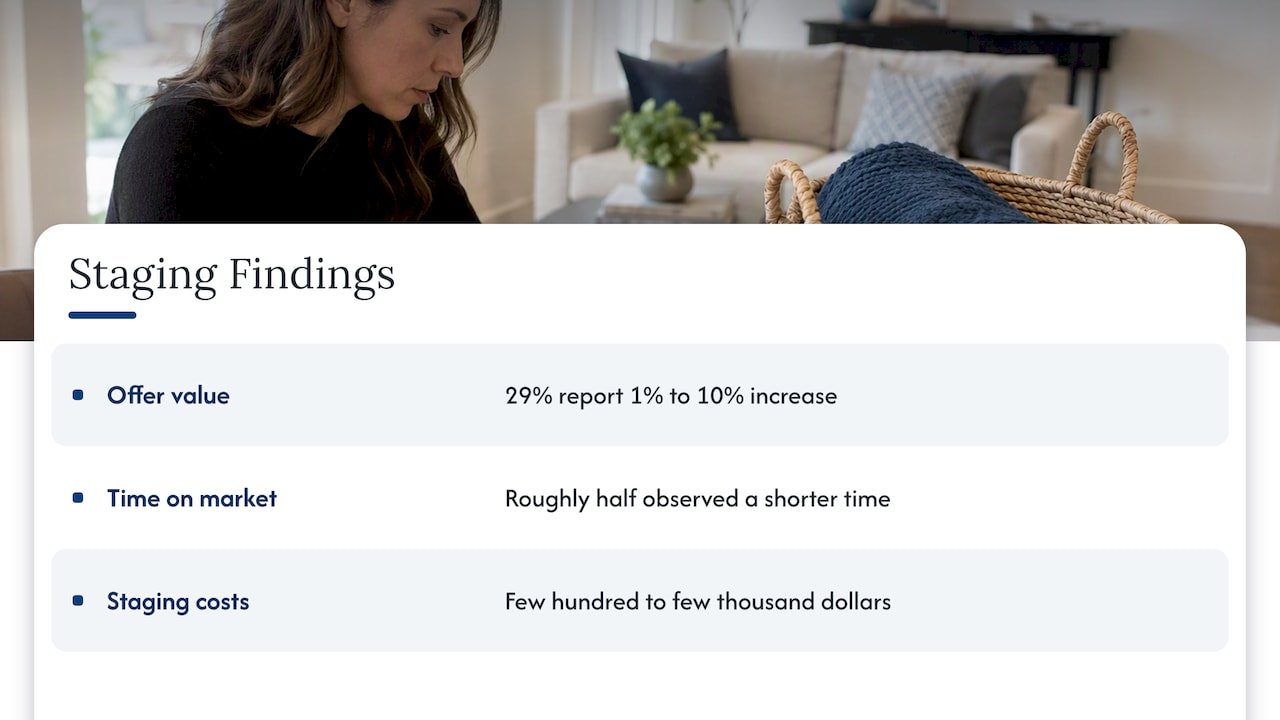
- Staging research found about 29% of agents reported offers rising 1% to 10% after staging, while roughly half observed shorter market times.
- Compare expected price gains with staging and holding costs; if the return does not cover expenses, keeping a well presented home occupied may cost less.
- Set fixed showing windows, give 24 to 48 hours’ notice for inspections, and use virtual tours to reduce disruption and avoid canceled appointments.
- Many insurers change coverage after 30 to 60 days without occupants, so confirm policy terms and arrange checks for leaks, pests, and security problems.
Table of Contents
- 1. Pros and Cons of Selling Occupied vs Vacant
- 2. What the Data Shows on Staging, Price, and Time on Market
- 3. Selling With Tenants: Logistics and Cooperation
- 4. Getting a Vacant Home Ready to Show
- 5. How We Approach Occupancy Decisions With the Premier Selling System
- Our Quick Take on Occupied vs Vacant
- Why Work With Us on Your Occupied or Vacant Sale
- FAQ
- Sources
1. Pros and Cons of Selling Occupied vs Vacant
Each path has trade-offs that matter more depending on who is buying and how fast you need to close.
An occupied home gives buyers a sense of scale and warmth that empty rooms rarely match. A family currently living in the space, with furniture placed sensibly and rooms used as intended, helps shoppers picture their own life there. If the property is a rental, you also keep collecting income while it is on the market. The downside is friction: showings need coordination, clutter can creep in, and tenants may limit the days and hours buyers can tour the home.
Going vacant gives you a clean slate. Contractors can come and go freely, staging companies can fill the space exactly as they want, and there is no risk of a tenant’s belongings distracting a buyer. The trade-off is that empty rooms often look smaller and colder in person and in photos, and every flaw, a scuffed floor, a crack in the drywall, stands out with nothing to soften it. Vacant homes also carry costs: utilities, security, and often a separate vacancy insurance endorsement.
- Occupied tends to suit owner-occupant buyers who want to see how a family actually lives in the space.
- Vacant tends to suit investors and renovation buyers who care more about square footage and bones than décor.
- A quick, convenience-driven sale favors keeping tenants in place; a top-dollar sale built around staging usually favors going vacant for a short, defined window.
2. What the Data Shows on Staging, Price, and Time on Market
The clearest evidence on occupancy decisions actually comes from staging research, since staged vacant homes perform differently than unstaged vacant homes, and both differ from occupied homes shown as-is.
About 29% of agents report a 1% to 10% increase in dollar value offered after staging, and roughly half observed a shorter time on market, according to the NAR report on home staging. That price bump has to be weighed against staging costs, which commonly run from a few hundred to a few thousand dollars depending on scope, per the 2025 Profile of Home Staging. Buyers’ agents often report that staging makes it easier for buyers to visualize a home as their own, according to the 2023 Profile of Home Staging, and staging the living room, primary bedroom, and kitchen matters most.
The simplest way to decide is a basic return check: multiply the expected price uplift by your likely sale price, then compare that dollar figure against your staging and holding costs. If the math clears, staging a vacant property is worth it. If it does not, keeping the home occupied and lived-in may get you a comparable result for less money.
3. Selling With Tenants: Logistics and Cooperation
A tenant-occupied sale lives or dies on cooperation. When tenants work with you, showings run smoothly and appraisers and inspectors get the access they need on schedule. When they do not, access gets restricted, showings get canceled, and offers slow down or shrink, according to reporting on selling tenant-occupied property.
- Set clear, predictable showing windows instead of allowing random requests, so tenants can plan around them.
- Offer a small incentive for cooperation, such as a modest rent credit tied to a clean home during the listing period.
- Build in 24 to 48 hour notice for inspections and appraisal visits to reduce pushback and last-minute conflicts.
- Lean on virtual tours and video walkthroughs to cut down on the number of in-person showings needed.
- If a tenant remains resistant, market directly to investor buyers who expect to inherit a lease rather than get vacant possession.
Pro Tip: Block out two or three fixed showing days per week instead of leaving the calendar open, it reduces tenant friction and gives buyers urgency.
Specific landlord-tenant rules vary by state, and sellers working through selling a house with tenants in California should check the notice periods and access rights that apply before scheduling the first showing.
4. Getting a Vacant Home Ready to Show
An empty house needs more upkeep than most sellers expect, both to protect it and to make it photograph well.
- Check the property regularly or arrange a service to catch leaks, pests, or break-ins before they become costly.
- Confirm your insurance carrier offers a vacancy endorsement, since standard homeowners policies often limit coverage once a home sits empty for an extended stretch.
- Keep the lawn, walkways, and exterior maintained so curb appeal does not slip while the home sits unoccupied.
- Decide between full furniture rental, partial staging in key rooms, or virtual staging added to photos after the shoot.
- Shoot photos and video in strong natural light, use wide angles that show room flow, and consider twilight exterior shots for listings that lean on curb appeal.
A pre-listing inspection, typically budgeted between $300 and $600, is worth scheduling before the home sits vacant, since an empty house tends to expose small defects that a lived-in one can mask. Professional listing photos are also worth the cost here, since vacant rooms depend entirely on lighting and composition to read as inviting rather than empty.
Pro Tip: Book staging and photography for the same week you go vacant, an empty house sitting unstaged for weeks only adds cost without adding appeal.
5. How We Approach Occupancy Decisions With the Premier Selling System
We typically recommend keeping a home occupied when the tenant or owner is cooperative and the property shows well as-is, since that preserves income and avoids vacancy costs. A listing is shifted to vacant when a pre-listing inspection turns up repairs worth making, or when the layout and finishes respond well to full staging.
When tenant friction threatens a sale, our team leans on targeted outreach to investor buyers, pre-listing inspections to surface issues early, and short off-market testing windows of 10 to 14 days to gauge demand before committing to a full public listing.
Our Quick Take on Occupied vs Vacant
Occupancy decisions come down to three checkpoints: the home’s condition, whether tenants will cooperate, and how much time you have before you need to close. A home in solid shape with a cooperative tenant rarely needs to go vacant. A home with real flaws, or one with a tenant unwilling to accommodate showings, usually benefits from a short, planned vacancy window.
If your situation involves multiple moving pieces, tenants, repairs, and a tight timeline at once, a full-service listing agent or a guaranteed sale program can take the pricing and scheduling decisions off your plate.
— Ryan Case
Why Work With Us on Your Occupied or Vacant Sale
Deciding between occupied and vacant is only one piece of pricing and marketing a home correctly, and getting it wrong in either direction costs sellers real money. A proprietary selling system builds strategic pricing, targeted buyer outreach, and tools like Zillow Showcase into every listing, whether the home is occupied, vacant, or somewhere in between during the transition.
We also know small cosmetic fixes move the needle before any staging dollars get spent. For low-effort upgrades that make rooms photograph better, worn interior doors or dated closets are often the first thing buyers notice walking through a vacant space, and resources like door and closet upgrade ideas can help you budget before listing.
If you are weighing whether to list your home occupied or vacant, our strategic home pricing page walks through how we price and market both scenarios, and you can reach out to get a plan built around your property, your timeline, and your tenant situation if one applies.
FAQ
How long does a house have to be empty to be considered vacant?
A housing unit is generally classified as vacant if nobody is living there at the time it is surveyed or inspected, according to Census housing vacancy definitions. For insurance and listing purposes, many carriers treat a home as vacant once it has been unoccupied for 30 to 60 days, though the exact threshold depends on your policy.
How long can a property be unoccupied?
There is no single legal limit on how long a property can sit unoccupied, but insurance coverage often changes once a home passes 30 to 60 days without anyone living there. Checking for a vacancy endorsement before that window closes helps avoid a coverage gap.
Is it harder to sell a vacant house?
Vacant houses are not inherently harder to sell, but they tend to show smaller and colder without staging, and they expose flaws that a lived-in home can mask. Pairing a vacant listing with staging and strong photography, which NAR staging research links to easier buyer visualization, closes most of that gap.
How long can a house sit vacant before listing?
There is no fixed rule for how long a home should sit vacant before listing, but shorter is generally better since vacancy adds insurance, security, and upkeep costs without adding value on its own. A practical approach is to time the vacancy to a scheduled inspection, repair, and staging window, then list as soon as the home is photo-ready.
Sources
- NAR report reveals home staging boosts sale prices and reduces time on market
- Selling a property with tenants living in it? Here’s what to know (Inman)
- Housing Vacancies and Homeownership definitions (Census)