If you’re thinking, “I need to sell my house,” start with an agent-led listing priced for a fast sale, and reserve a cash buyer only for genuine urgency. A well-priced, well-marketed listing usually nets more money even when it takes a few extra weeks. Cash offers close faster but typically at a real discount. Your first move: read the selling options below, then run the numbers before you list.
TL;DR:
- A traditional listing typically takes 74 to 83 days to close and yields higher net proceeds due to broader market exposure.
- Cash buyers or iBuyers can close in 7 to 21 days but generally offer below-market prices, often at a discount.
- Proper pricing is critical, as overpricing can lead to longer market time and undervaluing can leave money on the table, with fees around 5.5% of the sale price on a $600,000 home.
- Preparing the house with fresh paint, decluttering, and staging improves buyer interest, while full remodels usually do not pay for themselves before listing.
- Using a targeted marketing approach like the Premier Selling System, which combines strategic pricing and direct buyer outreach, can shorten market time without sacrificing sale price.
Table of Contents
- I Need to Sell My House: Comparing Your Options
- What’s the Timeline From Listing to Closing?
- How Much Does It Cost to Sell a House?
- How to Prepare Your House to Sell
- Should You Use an Agent or Sell FSBO?
- How Do You Evaluate and Negotiate Offers?
- What Is the Premier Selling System?
- What Homeowners Get Wrong About Selling Fast
- Ready to Start? Here’s What Comes Next
- Sources
I Need to Sell My House: Comparing Your Options
Your choice comes down to a straightforward trade: speed against dollars. Every path below solves for a different priority, and picking the wrong one for your situation costs either time or money you didn’t need to lose.
Traditional agent listing. An agent lists your home on the MLS, markets it broadly, and negotiates on your behalf. National data shows the median timeline runs 74 to 83 days from list to close, depending on the property and market. This route generally produces the highest net proceeds because it exposes your home to the widest pool of buyers.
FSBO (for sale by owner). You skip the listing agent’s commission but take on marketing, negotiation, and legal disclosures yourself. It’s a narrow slice of the market, and it demands real time and risk tolerance.
Cash buyer or iBuyer. These companies buy directly, often closing in as few as 7 to 21 days. You skip showings and repairs, but the offer usually lands below market value.
Sell-before-you-list or bridge-buy. A newer option where a company or lender helps you buy your next home before your current one sells, useful if your move is time-sensitive but you still want to list on the open market for full value.
Here’s when each makes sense:
- Choose a traditional listing if you have 6 to 10 weeks of flexibility and want top dollar.
- Choose FSBO only if you have real estate or legal experience and a low-stress transaction.
- Choose a cash buyer if you’re relocating fast, facing financial pressure, or the home needs major repairs you can’t fund.
- Choose a bridge-buy if you need to secure your next home before selling this one.
What’s the Timeline From Listing to Closing?
A sale breaks into three phases, and knowing what happens in each keeps you from getting blindsided by delays.

Weeks before listing (2 to 8 weeks, scope-dependent). This is when you schedule a pre-sale inspection, complete repairs, declutter, and gather documents like your title, warranty records, and past permits. The scope of repairs decides whether this phase takes two weeks or eight.
Listing week. Your agent sets the price using recent comps, schedules professional photography, and pushes the listing live on the MLS with syndication to major buyer sites. The first 10 days of showings tend to generate your strongest offers, so this window matters more than any other.
Under contract to closing. Once you accept an offer, expect a home inspection within the first week, an appraisal shortly after, and mortgage underwriting that typically runs 30 to 45 days for a financed buyer. Cash deals skip the appraisal and underwriting wait entirely, which is exactly why they close faster.
Here’s a first-week checklist to keep you on track:
- Book a pre-sale inspection to catch issues before buyers do.
- Interview two or three agents and compare their pricing strategy and marketing plan.
- Start decluttering rooms buyers will photograph first: living room, kitchen, primary bedroom.
- Pull together your mortgage payoff statement, HOA documents, and any permits for past renovations.
- Ask your agent for a written comparative market analysis before you agree on a list price.
Pro Tip: Order your pre-sale inspection before you even choose an agent. Fixing the big-ticket items early means your agent can price aggressively instead of padding the number to cover unknown repairs.
How Much Does It Cost to Sell a House?
Pricing decides almost everything else about your sale, and it’s the one lever sellers get wrong most often.
Price too high and you’ll sit on the market while buyers assume something’s wrong; price too low and you leave money on the table before negotiations even start.
Now the costs. Selling a house isn’t free, and the fees add up fast:
- Agent commissions, commonly 2.5% to 3% per side, totaling roughly 5% to 6% when both buyer and seller agents are paid.
- Closing costs, typically 1% to 3% of the sale price, covering title work, escrow fees, and recording charges.
- Transfer taxes, which vary by county and city.
- Repair costs and buyer concessions, negotiated after inspection.
Here’s the math that actually matters: on a $600,000 home, a 5.5% total commission plus 2% closing costs runs about $45,000 in fees before you touch repairs or concessions. The only way to know which wins for your specific home is to run both numbers side by side before you commit to a path.
How to Prepare Your House to Sell
Not every improvement pays off, and knowing which ones do keeps you from wasting money before you list.
Fresh paint, deep cleaning, and fixing obvious defects (leaky faucets, cracked tile, broken fixtures) tend to return more than they cost. Full kitchen remodels or major landscaping overhauls rarely pay for themselves in the time you have before listing, so skip them unless a specific defect is scaring off buyers.
Staging and photography carry more weight than most sellers expect. High-quality listing photos and virtual tours increase buyer interest and can shorten days on market, and MLS-marketed homes with strong visuals consistently outperform homes with phone-quality photos or no staging at all.
Before your first showing, work through this:
- Declutter every surface and remove personal photos so buyers can picture themselves in the space.
- Maximize natural light: open blinds, replace dim bulbs, clean windows.
- Handle curb appeal first: fresh mulch, a trimmed lawn, and a clean front door make the strongest first impression.
- Gather appliance manuals, HVAC warranty documents, and any transferable home warranty paperwork.
- Confirm your state’s required seller disclosures and complete them honestly and early, per NAR’s guidance on preparing to sell.
Pro Tip: Sharing your pre-sale inspection report with early buyers can shrink negotiation friction later, since it removes the guesswork that usually drives a lowball offer after their own inspector shows up.
Should You Use an Agent or Sell FSBO?
A listing agent earns their commission by doing four things you can’t easily replicate alone: getting your home on the MLS, running targeted marketing to active buyers, negotiating offers, and managing the mountain of paperwork and deadlines that come with a real estate contract.
FSBO sellers make up a small slice of the market, roughly 7% in recent data, and the appeal is obvious: skip the commission, keep more of the sale price. But the risk is real. State disclosure laws vary widely, and sellers who miss a required disclosure can face legal disputes long after closing. FSBO can work if you have legal knowledge, time to manage showings and negotiations, and a home that doesn’t need much marketing muscle to sell.
For sellers who want both speed and top dollar, a documented process beats generic listing exposure. That’s the logic behind the Premier Selling System: instead of listing your home and hoping the right buyer finds it, it pairs strategic pricing with targeted outreach to an existing buyer database, which shortens time on market without sacrificing price.
- Traditional agents bring MLS access and negotiation experience.
- FSBO saves commission but shifts legal and logistical risk onto you.
- A documented buyer-outreach system like the Premier Selling System targets ready buyers directly instead of waiting for generic traffic.
How Do You Evaluate and Negotiate Offers?
Price is the number everyone fixates on, but it’s rarely the whole story. The offer with the highest sticker price isn’t always the one that nets you the most or closes the smoothest.
Compare offers on these terms before you decide:
- Net proceeds after credits, concessions, and closing cost splits, not just the offer price.
- Financing type: cash offers close faster and carry less risk of falling through than mortgage-contingent offers.
- Contingencies: inspection, financing, and sale-of-buyer’s-home contingencies each add risk and time.
- Proposed closing date and how well it matches your own moving timeline.
When negotiating repairs or an appraisal gap, it often works better to offer a credit at closing instead of doing the repair yourself, since it keeps the transaction moving without delaying for contractor schedules. Watch for common closing hurdles too: title issues, undisclosed liens, and unresolved HOA dues can all stall a closing. Ask your agent or title company to run a preliminary title check early, not the week before closing.
Pro Tip: Never evaluate an offer on price alone. A $10,000 higher offer with a shaky financing contingency can cost you more time and money than a slightly lower cash offer that closes in three weeks.
What Is the Premier Selling System?
The Premier Selling System is Ryan Case’s structured approach to listing homes in San Diego County, built around four components: strategic pricing based on real-time comp analysis, targeted marketing through channels like Zillow Showcase, direct outreach to an existing buyer database, and hands-on negotiation through every offer.

The idea behind it is simple: generic MLS exposure gets your home in front of anyone browsing, but a targeted buyer database and proactive outreach get it in front of people already looking for exactly what you’re selling. That combination is designed to shorten days on market while still pushing for a competitive sale price, rather than forcing sellers to pick one or the other.
Sellers who benefit most are those juggling a real timeline (a job relocation, a purchase contingency, a life change) who still want strong proceeds, not just a fast exit. When you engage the system, expect a home walkthrough and pricing analysis first, followed by a marketing plan tailored to your property and a clear rundown of what to expect week by week.
- Strategic, data-based pricing instead of a guess
- Targeted buyer outreach through an established database
- Coordinated marketing, including premium platforms like Zillow Showcase
- Direct negotiation support through offer review and closing
What Homeowners Get Wrong About Selling Fast
Most sellers treat “sell fast” and “sell for top dollar” as opposites, and that’s the wrong frame. The real problem is usually mismatched pricing, not a slow market. A home priced accurately from day one draws serious offers in the first two to three weeks regardless of whether you use an agent or a cash buyer, and that early traction is worth more than most sellers realize.
The conventional advice, list high and negotiate down, backfires more often than it works. Buyers today compare listings against sold comps within minutes, and an overpriced home sits long enough to look stale, which drags the eventual sale price down further than pricing it right from the start would have.
If you’re weighing your options, prioritize this: get your pricing strategy right before you touch staging or marketing budget. A documented system like the Premier Selling System matters precisely because it removes the guesswork from that first, most consequential decision. Speed and proceeds aren’t a trade-off when the pricing and outreach are handled correctly from week one. They’re the same outcome, achieved the same way.
— Ryan Case
Ready to Start? Here’s What Comes Next
If you’ve read this far, you already know the trade-off: FSBO saves a commission but adds risk, and a cash buyer gets you a fast close at a discount. The Premier Selling System is built to avoid making you choose. It combines strategic pricing, targeted marketing through platforms like Zillow Showcase, and direct access to an existing buyer database, aiming to sell your San Diego home faster while still pushing for a stronger sale price.
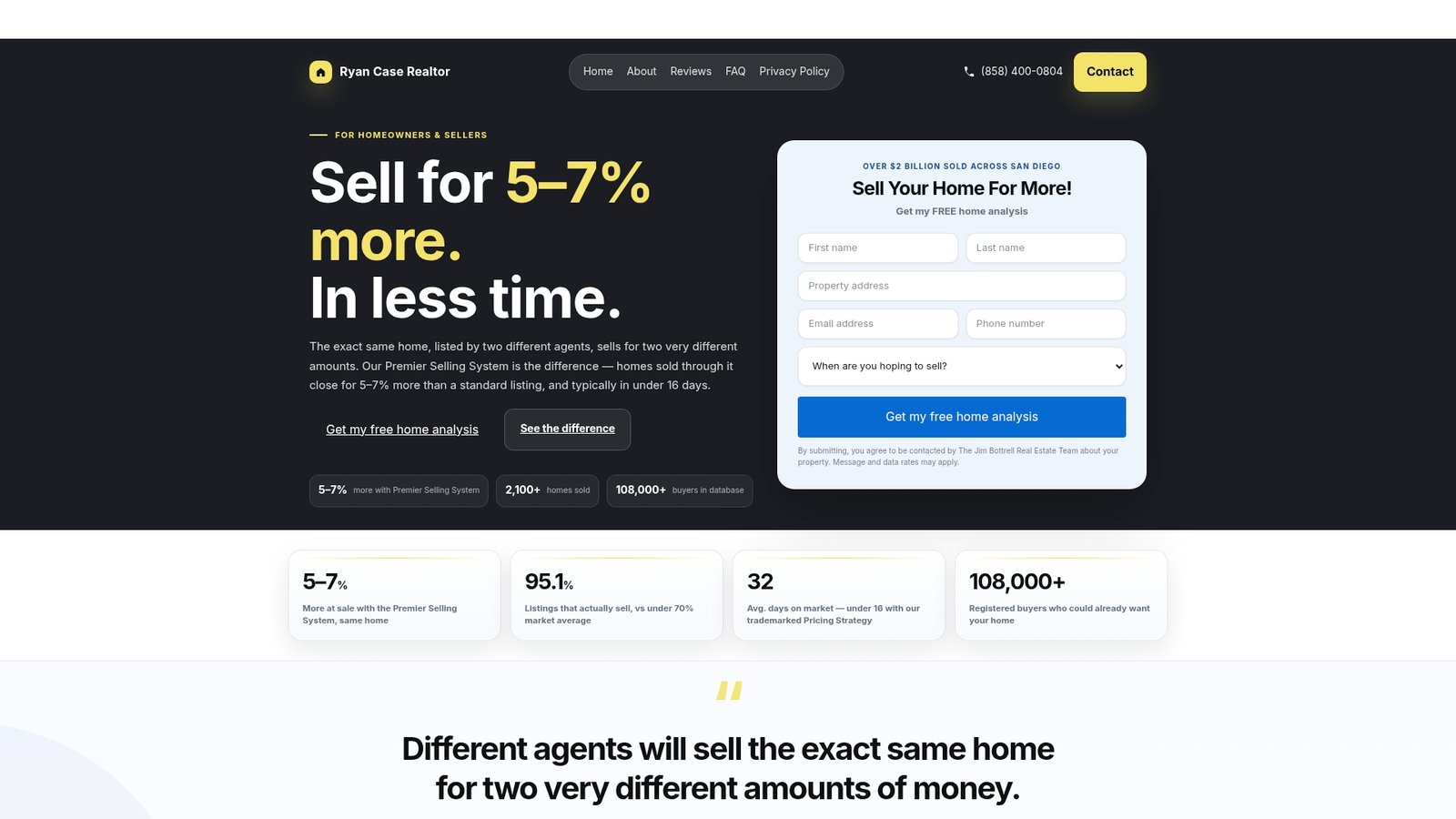
A first consultation starts with a walkthrough of your home and a real pricing analysis based on current comps, not a generic online estimate. From there, you’ll get a marketing timeline and a clear picture of what your home could net under this approach. If you’re ready to see what your home is worth under the Premier Selling System, reach out to start that conversation today.