Floor plan marketing turns a listing from a scroll-past into a scheduled showing. Listings with a floor plan attached see higher engagement and more scheduled viewings than listings without one, because buyers can rule a house in or out before they ever ask for a showing time.
Two things to do today: order or generate an accurate 2D floor plan for your active listing, then attach it to the MLS entry and the listing landing page as a primary asset, not an afterthought buried in the photo gallery.
Do that and you should see:
- More clicks on the listing itself
- Fewer showings from buyers who were never really a fit
- Faster yes-or-no decisions from serious buyers
Key Takeaways
Floor plan marketing works because it lets buyers self-qualify before booking a showing, which means the showings that do happen convert at a higher rate.
| Point | Details |
|---|---|
| Publish early | Add the floor plan during the “Coming Soon” phase, not after the MLS launch, to build early trust. |
| Match format to property | Use fast 2D plans for standard resales and 3D interactive plans for luxury or new construction. |
| Verify before publishing | Spot-check at least two room dimensions against actual square footage before the plan goes live. |
| Confirm licensing terms | Check whether your provider’s license covers MLS, social, print, and paid ads without extra fees. |
| Ryan Case integrates floor plans | The Premier Selling System schedules floor plans alongside photography and the listing landing page from day one of the launch. |
Table of Contents
- What Is Floor Plan Marketing and Why Does It Matter to Buyers?
- 2D or 3D? Choosing the Right Floor Plan Format
- What Should a Marketing Floor Plan Include?
- How Do You Make a Floor Plan That Actually Converts?
- How Do You Get Floor Plans Into Your Listing Workflow?
- How Does a Full-Service Listing Package Floor Plans Into Marketing?
- How Do You Find and Vet a Floor Plan Provider?
- What Should You Check Before Hiring a Floor Plan Service?
- Who Owns the Floor Plan, and What Are the Legal Risks?
- What Do Successful Floor Plan Marketing Campaigns Look Like?
- Frequently Asked Questions
- Sources
What Is Floor Plan Marketing and Why Does It Matter to Buyers?
A marketing floor plan is a simplified, labeled diagram of a property’s layout, built for buyer decision-making rather than construction. It strips out the technical notation an architect needs, like load-bearing walls or electrical runs, and keeps what a buyer actually wants: room sizes, flow between spaces, and where the furniture would go.
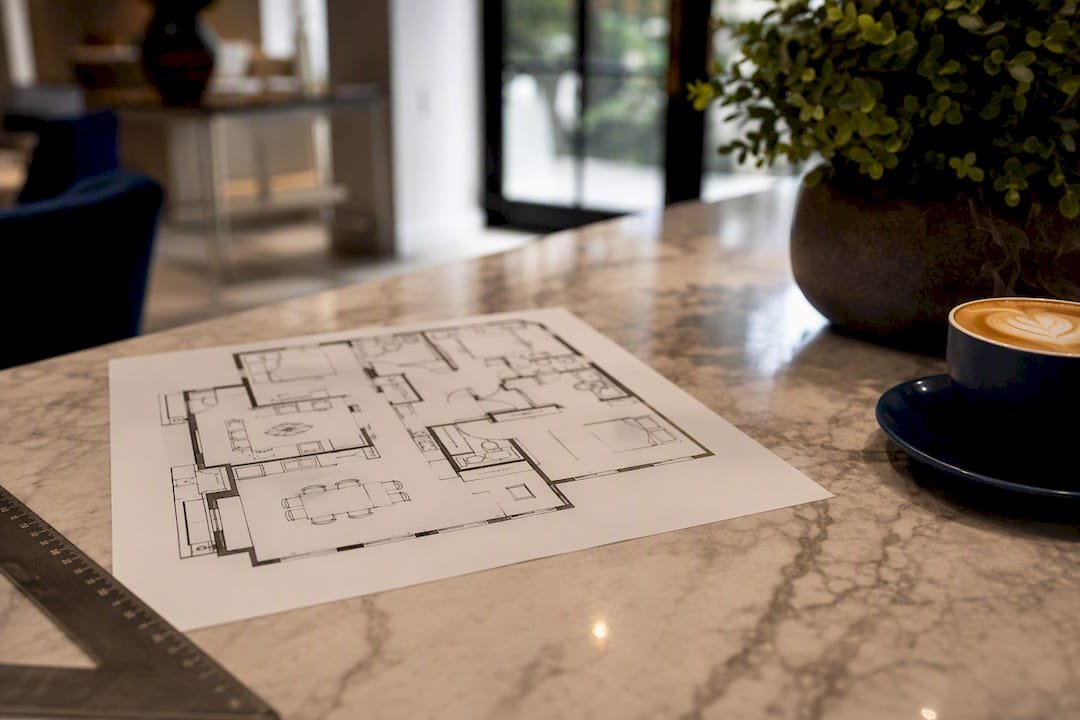
Statistic callout: High-quality floor plans are no longer a nice extra. Virtuance’s analysis of listing performance found that listings with them typically pull more clicks and more qualified leads than those without.
Buyers use a floor plan to self-qualify before they call an agent:
- Checking whether their sectional sofa actually fits the living room
- Confirming the primary bedroom is far enough from a home office for privacy
- Verifying step-free access for a parent who uses a wheelchair
- Mapping the commute from garage to kitchen to figure out grocery-day logistics
That self-qualifying step is why floor plans cut down on wasted showings. A buyer who studies the layout and decides the flow won’t work never books a tour in the first place, which saves both sides a wasted Saturday.
2D or 3D? Choosing the Right Floor Plan Format
Not every listing needs the same treatment. A $400,000 starter home and a $3 million coastal estate call for different production levels, budgets, and turnaround times.
2D schematic (black and white or single-tone): Fastest to produce, cheapest, and easy to read at any size. Best for standard resales where speed to market matters more than polish.
Stylized color 2D: Adds furniture icons, subtle branding, and color-coded rooms. Takes a bit longer and costs more, but reads well as a thumbnail on Zillow or Instagram.
3D dollhouse or interactive plans: Built from a Matterport-style scan, letting buyers rotate the whole structure or click floor-to-floor. Highest cost and longest turnaround, but strongest for luxury listings and new construction where buyers expect a premium presentation.
Real-world fit:
- Single-family resale: stylized color 2D, published fast, paired with photos
- Luxury listings: 3D interactive plan plus a branded print 2D for open houses
- New construction: 3D dollhouse showing options across multiple floor plans in one development
- Commercial or leasing: large, high-contrast 2D plans showing dock access, circulation, and clear spans for tenant qualification
What Should a Marketing Floor Plan Include?
A floor plan that looks fine on your screen can still fail a buyer standing in front of it on a phone. Run through this checklist before it goes live:
- Accurate scale and overall square footage, stated clearly
- Labeled rooms, including closets, laundry, and mechanical spaces
- A north-facing orientation arrow so buyers understand sun exposure
- Permanent fixtures marked: built-ins, fireplaces, stairs, columns
- Exterior features included when relevant: decks, patios, garages
- A simple legend and a font large enough to read at thumbnail size
File formats: Publish a high-resolution PDF for print and open-house handouts, and a compressed, web-optimized PNG or JPEG for the MLS and listing site. A file that is too large slows page load and hurts the exact engagement metrics you’re trying to boost.
During provider quality assurance, spot-check at least two rooms against the listing’s actual square footage, and scan for obvious omissions like a missing bathroom or a mislabeled bonus room. Those errors erode buyer trust fast, and a buyer who catches one mistake starts questioning the rest of the listing.
How Do You Make a Floor Plan That Actually Converts?
Accuracy comes first. If a buyer walks into a bedroom that looks bigger on the plan than it is in person, you lose credibility on that listing and possibly on your next one with the same buyer. Verify every dimension and label permanent features honestly, even the awkward ones like a low ceiling in the attic conversion.
Design clarity matters almost as much. Use a clean, readable font, keep any branding subtle enough that it doesn’t compete with the layout itself, and make sure the plan holds up as a small thumbnail, since that’s how most buyers will first see it on their phone.
The floor plan works best as part of a pair, not a solo act. Photos create the emotional pull, and the floor plan supplies the spatial logic that lets a buyer mentally move their life into the house. Pair the plan with photos, a video or virtual tour, and a description that references specific rooms shown on the plan, so all three assets reinforce one story.

Pro Tip: Put the floor plan right after the hero photo in your gallery order, not at the end. Buyers who see it early spend more time on the listing because they’re already trying to place their furniture.
Avoid these common mistakes:
- Cluttered logos or watermarks that obscure room details
- Rounding room dimensions up to sound more impressive
- Uploading a low-resolution scan that turns blurry at normal zoom
- Skipping the orientation arrow, which leaves buyers guessing about light
How Do You Get Floor Plans Into Your Listing Workflow?
A floor plan only works if it shows up everywhere a buyer might be looking. Sequence it like this:
- Pre-launch: Include the floor plan in “Coming Soon” teasers. Publishing it early builds trust and sets a premier listing apart before the MLS goes live.
- MLS launch: Upload the plan as a primary media asset, not an attachment buyers have to dig for.
- Listing landing page: Feature it prominently alongside the photo gallery and virtual tour.
- Email and social outreach: Use a cropped, branded thumbnail of the plan as a scroll-stopper in buyer database emails and social posts.
Cover these distribution points:
- MLS media section
- Single-property landing page
- Printed brochure or offering memorandum
- Social posts and paid ad creative
- Broker preview handouts
Track clicks on the floor plan asset itself, time spent on the listing page, and the ratio of showings to page views. If showings-per-click improve after you move the plan higher in the gallery, that’s your signal to keep it there for future listings. Before you publish anywhere, confirm the file format matches what your MLS and major syndicators accept. A repeatable listing marketing plan that schedules these steps in advance beats scrambling to add a floor plan after the listing already went live.
How Does a Full-Service Listing Package Floor Plans Into Marketing?
A coordinated listing launch treats the floor plan as one piece of a stack, not a standalone item. That stack typically includes professional photography, the floor plan itself, a 3D or video tour, a dedicated listing landing page, targeted email and paid distribution, and a report showing how each asset performed.
A realistic deliverables timeline: floor plan and photography ordered together within a day or two of signing, both delivered within 48 to 72 hours, then loaded into the landing page and MLS before the public launch date. Require providers to confirm measurements and check for labeling errors before final delivery.
ROI callout: Large-format 2D plans reduce wasted tours because buyers who wouldn’t fit the space self-select out early, which means the showings that do happen convert at a higher rate. Ryan Case’s Premier Selling System builds floor plans into that same launch sequence from day one, alongside the photography and landing page rather than as a bolt-on later.
How Do You Find and Vet a Floor Plan Provider?
Start by defining what the listing needs before you contact anyone. A studio condo needs a quick 2D scan. A five-bedroom luxury estate probably justifies a 3D interactive walkthrough. Knowing that up front keeps the conversation focused and the quote realistic.
Ask each candidate provider how they capture measurements: laser measuring tools like a Matterport Pro or a Leica device produce tighter accuracy than a tape measure and a sketch pad. Request a sample from a recent listing similar in size to yours and check it against the property’s actual square footage, if you have that number.
Turnaround time matters more in this business than almost any other creative service, because a listing sitting unmarketed for an extra three days is lost momentum. Ask directly: what’s the standard delivery window, and what does rush service cost if you need it for a Friday launch?
Confirm file delivery formats before you sign anything. You need both a print-ready PDF and a compressed web file, and if the provider only delivers one, you’ll be paying someone else to convert the other. Also ask whether revisions are included if you catch a labeling error during your own quality check, or if that’s a separate charge.
Finally, ask about licensing terms up front, specifically whether you can use the plan across MLS, social media, print brochures, and paid ads without additional fees. Some providers license per-platform, which can turn a cheap floor plan into an expensive one once you add up every channel where you plan to publish it.
Get a few provider quotes on your first two or three listings, then stick with whoever delivers accurate, fast, and easy to reach. Consistency in your floor plan provider means consistency in your listing launches, and buyers notice a clean, professional pattern across your inventory even if they can’t name why.
What Should You Check Before Hiring a Floor Plan Service?
Run any provider through this short list before signing on:
- Accuracy method: Do they use a laser measuring tool, or estimate by eye?
- Sample quality: Does a recent sample hold up at both full size and thumbnail zoom?
- Turnaround: What’s the standard delivery window, and what does rush cost?
- File formats: Do you get both a print PDF and a web-optimized image?
- Revisions: Is a correction round included if you catch a measurement error?
- Licensing: Can you use the plan across MLS, social, print, and paid ads without extra fees?
- References: Can they point to other agents in your market who use them regularly?
Price matters, but it shouldn’t be the only filter. A provider who charges slightly more but delivers in 24 hours with zero errors saves you more in avoided rework than the cheaper option that needs three rounds of corrections. Ask about volume pricing too, if you list often. Providers frequently offer a lower per-unit rate to agents who commit to a monthly volume, which matters if floor plans become a standard part of every listing you take.
One overlooked question: what happens if you need the plan updated after a renovation photo shoot or a staging change? Some providers charge a full new fee, while others treat minor updates as a quick add-on. That answer alone can tell you a lot about how the provider treats ongoing relationships versus one-off transactions.
Who Owns the Floor Plan, and What Are the Legal Risks?
Copyright in a floor plan typically belongs to whoever created it, not to the agent or seller who paid for the shoot, unless your contract says otherwise. That distinction matters the moment you want to reuse a plan for a future listing, a marketing template, or a website portfolio piece.
Read the licensing terms in your provider agreement before you sign, not after. Some providers grant a broad, perpetual license covering MLS, social, print, and paid distribution. Others license per-platform or per-use, meaning the plan you paid for a resale listing can’t legally be reused on a rental listing for the same property without an additional fee.
There’s a second layer of risk specific to real estate: floor plans of an existing home can reveal details relevant to occupant safety and privacy, particularly for properties still occupied at the time of marketing. Avoid publishing floor plans that show security system panel locations, safe placements, or other details a seller would reasonably want kept private.
For new construction and multi-unit developments, verify whether the floor plan reflects the actual as-built unit or a generic model unit with different finishes or a mirrored layout. Marketing a floor plan that doesn’t match the actual unit a buyer will receive creates a disclosure problem, not just a design inconvenience. When in doubt on any of these points, loop in your broker or a real estate attorney familiar with your state’s disclosure requirements before publishing.
What Do Successful Floor Plan Marketing Campaigns Look Like?
The strongest examples share one trait: the floor plan gets treated as a headline asset, not a footnote. A listing that leads its social post with a clean, branded floor plan thumbnail alongside the hero photo tends to generate more saves and shares than one that buries the plan on slide seven of a photo carousel.
In the commercial and leasing world, large 2D floor plans distributed across offering memorandums and listing platforms get reused for months after the initial listing goes live, since tenant prospects keep coming back to check clear spans and dock positioning against their own operational needs. That reuse is where the real return shows up: one accurate plan, produced once, keeps paying off across every prospect who reviews it.
On the residential side, floor plans have proven especially valuable for properties that are harder to sell on photos alone, like homes with unusual layouts, split levels, or additions that don’t photograph in a way that makes the flow obvious. A buyer scrolling past photos of a chopped-up 1970s ranch might swipe away in seconds. The same buyer looking at a floor plan showing how three small rooms actually connect into a workable open flow might stop and book a tour instead.
A Listing Agent’s Take on Timing Floor Plans Right
Order the floor plan the same day you book photography, not after. Sellers respond well when you show them the plan draft before launch, because it makes the marketing feel tangible. Add floor plan QA and MLS upload confirmation to your pre-launch checklist every time, no exceptions.
Getting Floor Plans Right From the Start of Your Listing
The Premier Selling System builds the floor plan into the same launch sequence as photography and the property landing page, so it’s ready before the “Coming Soon” phase rather than added after the fact.
Instead of piecing together photographers, floor plan vendors, and a web designer separately, sellers working with Ryan Case get a full launch package coordinated from day one, with the floor plan built to work across MLS, print, and paid distribution without licensing headaches. If you’re preparing to list in San Diego County and want the floor plan handled correctly the first time, start with a home analysis at Ryan Case to see how your listing would launch under the full system.
Frequently Asked Questions
Does adding a floor plan actually increase showings, or just clicks?
Both. Floor plans drive more clicks on the listing itself, and buyers who click through and study the layout are more likely to book a showing because they’ve already confirmed the space fits their needs.
How much does a professional floor plan typically cost?
Pricing varies by provider and format, with basic 2D schematics costing far less than 3D interactive scans. Get quotes from two or three local providers for your specific property size before committing.
Can I use a free app to make my own floor plan instead of hiring a provider?
You can, but accuracy and design quality usually suffer, and a rough or mislabeled plan can hurt buyer trust more than having no plan at all. For anything beyond a quick personal sketch, a professional provider is worth the cost.
Do floor plans need to be included in the MLS, or just on my website?
Include them in both. The MLS syndicates to major buyer-facing sites, so a floor plan left off the MLS entry misses most of the audience who never visits your standalone landing page.
What’s the biggest mistake agents make with floor plan marketing?
Treating the floor plan as an optional attachment instead of a primary asset. Burying it at the end of a photo gallery or leaving it off social posts wastes most of its self-qualifying value.
Sources
- How Marketing Floor Plans Help Drive Real Estate Sales | Matterport
- Why Real Estate Floor Plans Matter for Property Marketing | Virtuance
- The Strategic Value of Large 2D Floorplans in CRE Marketing | VidTech
- The Ultimate Real Estate Listing Marketing Plan (PDF Checklist) | The Close
- Floor Plans for Real Estate Marketing | Upside for Agents, Set Yourself Apart | Homes for Heroes