Yes, but it almost always requires a mutual written release or strict compliance with the contract’s own termination clause. Simply telling your agent you’ve changed your mind rarely ends the deal cleanly. Before doing anything else, pull out your signed agreement, find the termination and protection-period sections, and ask your broker for a signed Cancellation of Listing form. That single request sets everything else in motion.
TL;DR:
- Most cancellations require a signed release from the broker, not just notifying the agent, and often depend on specific contract clauses like protection periods.
- Terminating a listing early can lead to breach penalties if done outside agreed terms unless justified by misconduct such as fraud or abandonment.
- Proper cancellation involves a sequence of steps including reviewing the agreement, notifying the broker in writing, and obtaining a mutual release to prevent future disputes.
- Sellers may still owe commissions or reimbursement costs during the protection period, which can extend as long as 180 days depending on the form used.
- Escalating disputes beyond the broker level typically involves formal complaints or legal action, but most issues resolve with negotiation or waiting out the contract.
Table of Contents
- What a Listing Agreement Actually Locks You Into
- When Can You Legally Cancel a Listing Contract?
- How to Cancel Your Listing Agreement Step by Step
- What You Might Still Owe After Canceling
- What to Do If the Brokerage Won’t Let You Out
- Ryan Case’s Take: What Actually Happens When Sellers Ask to Cancel
- Ready to Review, Renegotiate, or Relist?
- Official Forms and Guidance Worth Bookmarking
- Sources
What a Listing Agreement Actually Locks You Into
A listing agreement is a contract between you and a brokerage, not between you and the individual agent who knocked on your door with a market analysis. That distinction matters the moment you want out, because the agent you’re frustrated with may not even be the person with authority to release you.
Most sellers sign one of two structures. An exclusive right-to-sell agreement pays the brokerage a commission no matter who finds the buyer, even you. An exclusive agency agreement only pays the brokerage if the brokerage (or its agent) produces the buyer; you can sell it yourself commission-free. The difference sounds minor until you’re trying to cancel and the broker points to language you skimmed past on page two.
Before you call anyone, read these sections closely:
- Term — the start and end date of the agreement, and whether it auto-renews.
- Termination clause — whether either party can end the contract early, and under what conditions.
- Protection clause (sometimes called a “tail” or “safety” clause) — whether the broker still earns a commission if you sell to a buyer they introduced, even after cancellation.
- Expense reimbursement — whether you owe the brokerage for marketing costs already spent.
- Notice requirements — how termination must be delivered (certified mail, email with confirmation, in-person signature).
Standard industry templates, like the C.A.R. Form COL used widely across California and referenced as a model elsewhere, spell out exactly these fields: effective date, reimbursement terms, and whether the protection period survives. Because the contract binds the brokerage, a release typically needs the managing broker’s signature, not just your listing agent’s agreement, to actually stick.
When Can You Legally Cancel a Listing Contract?
Here’s the distinction that trips up most sellers: you almost always have the power to revoke your agent’s authority to act for you. You don’t always have the legal right to do it without consequences. Agency law lets a principal end the relationship at will. But ending it outside the contract’s own terms can still be a breach, and breach carries a price tag.
Real legal grounds for canceling without the broker’s consent do exist. They include:
- Material breach of fiduciary duty, such as the agent failing to present offers or disclosing your confidential financial position to a buyer.
- Fraud or misrepresentation in how the agent obtained your signature or represented the property.
- The brokerage abandoning the listing entirely (no marketing, no showings, no communication for weeks).
If you’re going to argue one of these, document it. Save emails, showing logs, MLS activity reports, and dates of any missed commitments. A verbal complaint about “not liking the vibe” won’t hold up if the brokerage decides to push back.
NC REALTORS® guidance makes the risk explicit: withdrawing before expiration without legally sufficient cause can constitute a material breach, exposing you to damages that include the commission itself and reimbursement for marketing expenses already spent. That’s a real number, not a scare tactic. If your agreement has 45 days left and the relationship isn’t broken, sometimes the cheapest path is just waiting it out.
Pro Tip: Before threatening to walk, check how many days remain on your term. Brokers are far more willing to negotiate a clean release with three months left than with three weeks, since there’s less revenue at stake for them to protect.
How to Cancel Your Listing Agreement Step by Step
Ending a listing agreement well comes down to sequence. Skip a step and you either waste money or leave the door open for a commission dispute months later, right when you’re trying to close with a new agent.
- Read the full agreement first. Highlight the termination clause, protection period, and any reimbursement language before you say a word to your agent.
- Talk to your agent directly. Many cancellations happen at this stage with no drama at all, especially if the issue is responsiveness rather than misconduct.
- Escalate to the managing broker if needed. If the agent stalls or refuses, request a conversation with the broker of record and put your concerns in writing.
- Send formal written notice. Use certified mail or a documented email, state an effective date, and cite the specific contract clause you’re relying on if one applies. LegalClarity’s guidance on submitting cancellation forms notes that written notice, not a phone call, is the operative act that starts the clock.
- Get a signed mutual release. This is the actual Cancellation of Listing document, and it should state plainly whether the protection period survives.
- Confirm MLS deactivation separately. A canceled contract and a canceled MLS listing are not automatically the same thing.
- Keep everything. File the fully executed release, all correspondence, and receipts for any marketing costs you’re asked to reimburse.
Sellers routinely assume that once the paperwork is signed, the property disappears from listing sites overnight. It doesn’t work that way. The MLS status field (Canceled, Withdrawn, or Expired) is a separate action from the contract itself, and confirming that switch in writing is the step people forget most often, according to LegalClarity’s breakdown of cancellation forms.
Before you contact the brokerage, a short printable checklist helps keep the conversation focused:
- Copy of the fully signed listing agreement
- Highlighted termination and protection clauses
- Dated log of communication issues, if relevant
- Draft written notice with a proposed effective date
- List of any marketing materials or costs you’re aware the broker incurred
What You Might Still Owe After Canceling
Ending the contract on paper doesn’t automatically end your financial exposure. Two clauses do most of the damage: the protection period and marketing reimbursement.
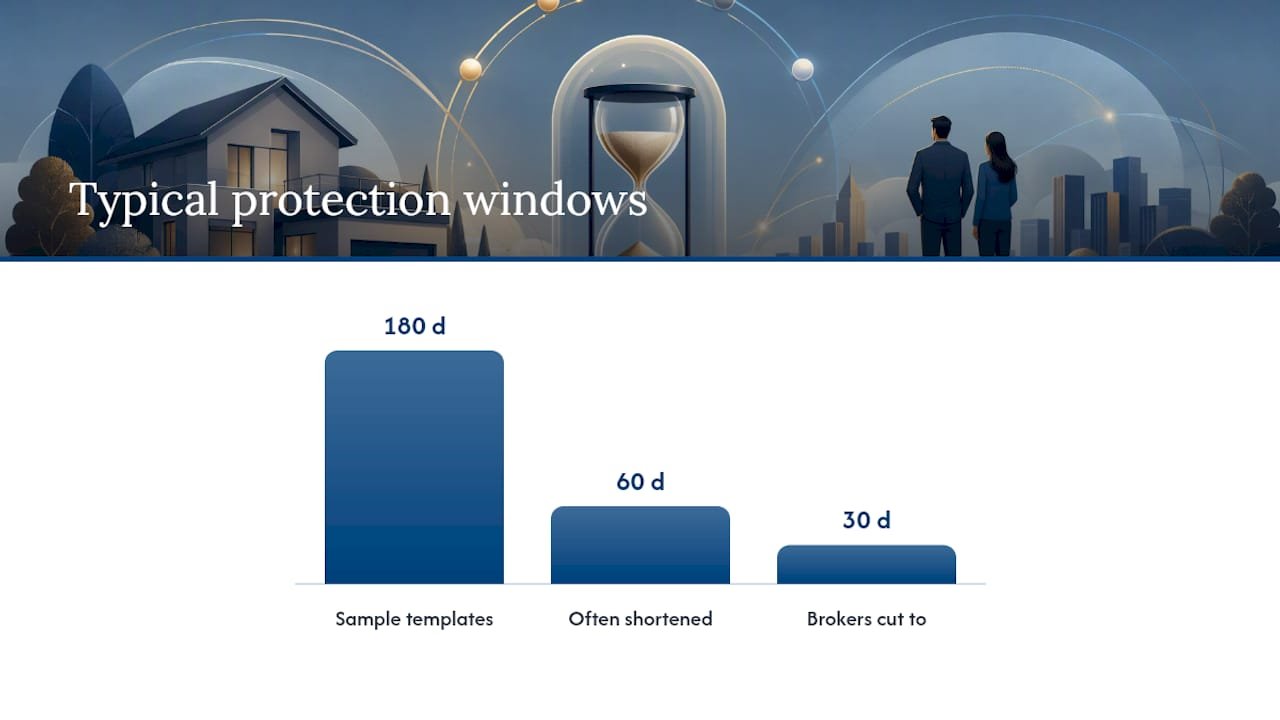
A protection period (also called a safety or tail clause) says that if you sell to a buyer the brokerage introduced during the listing, the broker still earns commission, even after cancellation and even after you’ve signed with someone else. Sample association templates, including one from the Chicago Association of REALTORS®, show protection windows that can run as long as 180 days depending on the form’s wording. That’s not universal. Some brokers will cut it to 30 or 60 days without much pushback if you ask.

Marketing expense reimbursement covers costs the brokerage already spent: professional photography, printed brochures, paid social ads, staging consultations. Reasonable reimbursement means actual, receipted costs, not a flat penalty invented on the spot. Ask for an itemized list before agreeing to pay anything.
Commission exposure also depends on which type of agreement you signed. Under an exclusive right-to-sell contract, the brokerage can argue for its full commission even if you find the buyer yourself. Under exclusive agency, you’re generally in the clear if you sell the home without the brokerage’s involvement.
When you’re at the negotiating table, four levers tend to move the needle:
- Ask the broker to name specific protected buyers rather than leaving the clause open-ended.
- Push to shorten the protection window to a defined number of days.
- Cap reimbursement at documented, receipted expenses only.
- Request an unconditional release clause if the broker agrees to waive future claims entirely.
According to LegalClarity’s guide to termination costs, these four points cover most of what a reasonable mutual release should address, and brokers who’ve already decided to let you go are often willing to concede on at least two of them.
What to Do If the Brokerage Won’t Let You Out
Most cancellations resolve at the broker level. When they don’t, there’s a real escalation path, though it’s slower and less satisfying than most sellers expect.
Start with the managing broker, in writing, even if you’ve already spoken by phone. A paper trail matters if this goes further. If the agent’s conduct crosses into ethical territory, misrepresenting facts, ignoring fair housing obligations, acting on a clear conflict of interest, you can file a complaint with your local REALTOR® association. That process can result in disciplinary action against the agent, but it typically won’t force a financial refund or void your contract.

For actual license law violations, fraud, unlicensed practice, commingling funds, the right venue is your state real estate commission. State licensing FAQs, like the ones published by NC REALTORS®, lay out exactly what conduct qualifies and how to file. Every state runs its own board, so check your own state’s commission site for the specific complaint process.
Here’s the limitation nobody mentions upfront: regulatory boards discipline agents. They rarely order a brokerage to release you or pay you back. If money is on the line, real damages from a botched sale or a wrongly withheld deposit, that usually means a private attorney, not a licensing complaint.
Before hiring counsel, run through this quick gut check:
- Is the dollar amount at stake bigger than a few hours of attorney fees?
- Do you have documentation, not just frustration, to support your claim?
- Would simply waiting out the remaining term cost less than fighting it?
For most sellers with 30 or 60 days left on a listing, waiting wins. For sellers facing real financial harm, an attorney consult is worth the cost.
Ryan Case’s Take: What Actually Happens When Sellers Ask to Cancel
Most cancellation requests aren’t really about the contract. They’re about a seller who’s lost confidence in their agent’s plan. When that happens within a brokerage, the first move should be reassignment, not termination. Swapping agents while keeping the listing intact solves the actual problem (poor communication, a stale marketing plan) without triggering protection-period disputes or reimbursement fights.
When reassignment isn’t realistic, a documented mutual release with clear terms beats a drawn-out standoff every time. In practice, the negotiated middle ground usually looks like a shortened protection window, an itemized reimbursement capped at real receipts, or, when the brokerage genuinely underperformed, an unconditional release with no strings attached.
Sellers considering a fresh listing after a rocky first attempt should ask any prospective agent for specifics: how pricing gets set, how many active buyers are already in their pipeline, and what the marketing plan actually includes beyond a sign in the yard. Vague answers are a signal. Specific numbers and a documented process are what separate agents who close deals from agents who just take listings.
— Ryan Case
Ready to Review, Renegotiate, or Relist?
If you’re stuck in a listing that isn’t working, you have options beyond gritting your teeth until the term runs out. Ryan Case reviews existing listing agreements for San Diego sellers, helps negotiate a clean cancellation with the current brokerage when that’s the right move, and offers a clear path to relisting through the Premier Selling System, which is built around strategic pricing, a large existing buyer database, and targeted exposure on platforms like Zillow Showcase.

Whether you need someone to look over your current contract before you sign a cancellation, or you’re ready to relist with an agent who explains exactly how pricing and marketing decisions get made, Ryan offers service tiers ranging from paperwork-only support to full-service and guaranteed-sale programs. Request a free home analysis and consultation to find out which option fits your situation, and get a straight answer on what a fresh listing could realistically achieve before you commit to anything.
Official Forms and Guidance Worth Bookmarking
Keep a few primary sources on hand before you sign anything. The C.A.R. Form COL sample shows the standard fields a cancellation form should include. NC REALTORS® licensing guidance explains breach risk and where to file a complaint. Your own state real estate commission site will list your state’s specific process. Sellers working with an agent found through a referral network, such as Findre, can ask their new agent to walk through these same documents before signing a fresh agreement.
This article is general information, not a substitute for advice from a qualified lawyer. Consult a qualified legal professional about your own circumstances before acting on anything here.
Sources
- Am I required to terminate a listing at the seller’s request? – NC REALTORS®
- Cancellation of Listing (template) — TheMLS / sample C.A.R. COL
- How to fill out and submit a real estate listing cancellation form – LegalClarity
- Termination of Listing Agreement — Chicago Association of REALTORS® (sample)
- How to Terminate a Listing Agreement: Steps and Costs – LegalClarity