Yes. For nearly every listing above starter-home pricing, professional listing photos pay for themselves many times over in faster showings and stronger offers. The upfront cost, typically a few hundred dollars, is small next to what a home sits on the market losing buyer interest with dark, crooked phone shots.
Do this now:
- Book a photographer at least a week before your listing goes live.
- Deep clean, declutter, and stage key rooms before the shoot.
- Confirm the number of edited images, file formats, and turnaround time in writing.
Listings with high-quality images consistently get more online views, and professional real estate photography is one of the few marketing line items with a measurable return.
Key Takeaways
Professional listing photos are worth the investment because sharper images drive more online views, faster showings, and stronger offers than phone-shot alternatives.
| Point | Details |
|---|---|
| Book early | Schedule a photographer at least a week before your listing date to avoid rush fees. |
| Match media to the home | Use drone, twilight, or 3D tours only where the property size or style justifies the add-on cost. |
| Confirm deliverables upfront | Get image count, file format, licensing terms, and turnaround time in writing before booking. |
| Vet with real questions | Ask about equipment, editing consistency, reshoot policy, and references, not just price. |
| Treat photos as marketing infrastructure | Pair strong imagery with targeted ads and buyer outreach for the biggest impact. |
Table of Contents
- Why Professional Listing Photos Actually Move the Needle
- Which Type of Listing Media Does Your Home Actually Need?
- What Do Professional Listing Photos Cost in 2026?
- How Do You Pick the Right Real Estate Photographer?
- How Ryan Case Builds Photography Into a Full Listing Strategy
- What the Research Actually Supports, and What Gets Overhyped
- Frequently Asked Questions
- Sources
Why Professional Listing Photos Actually Move the Needle
Buyers scroll before they ever call an agent. Blurry, poorly lit photos get skipped in two seconds; sharp, well-composed ones stop the scroll and get clicked into a full gallery. Virtuance’s research on listing behavior finds that professional real estate photography helps homes stand out online and sell faster than listings shot on a phone.
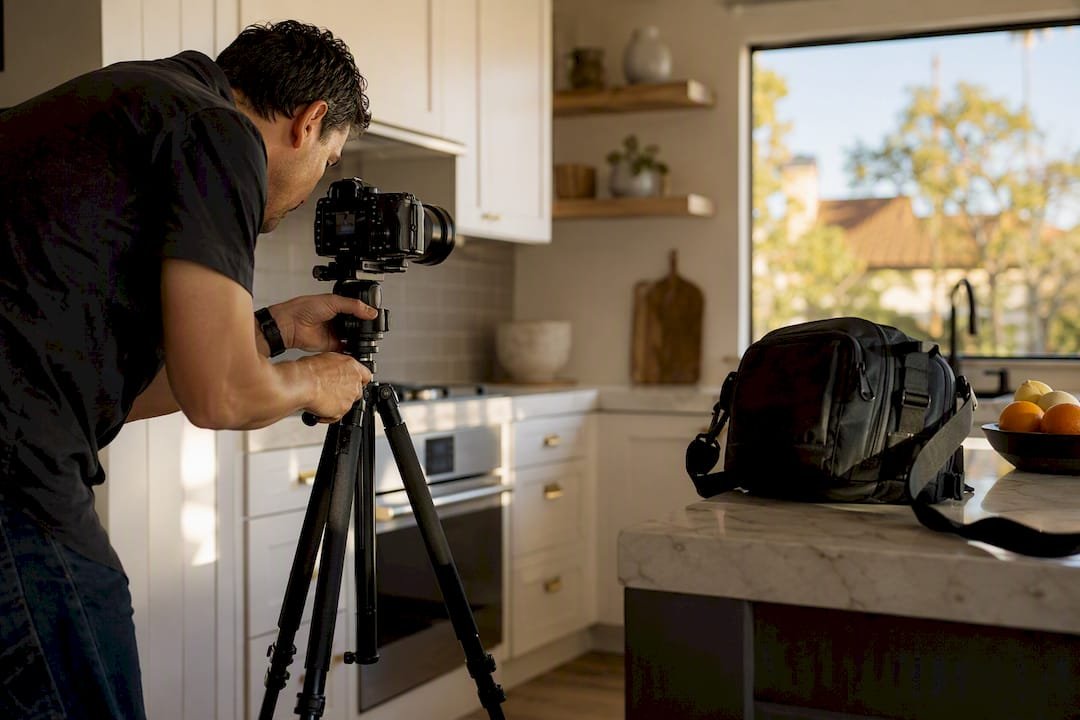
The effect compounds. More online views mean more showing requests, and more showing requests mean more competing offers. That’s the mechanism behind faster days on market, not luck.
There’s a second, quieter benefit: photos are also how agents win the listing in the first place. Branding guidance from RealScout notes that consistent, professional imagery signals marketing commitment at the listing appointment, before a single buyer sees the home.
Where it matters most:
- Online marketplaces: Zillow, Realtor.com, and MLS syndication all lead with the photo gallery.
- Social ads: carousel and slideshow formats depend entirely on image quality to hold attention.
- Listing presentations: a strong portfolio helps an agent close the seller before marketing even starts.
Which Type of Listing Media Does Your Home Actually Need?
Not every home needs every service. Matching the media to the property avoids wasted spend and missed opportunity.
- Standard interior/exterior HDR photography is the baseline. Every listing needs sharp, well-lit, wide-angle shots of each room and the exterior. HDR blending balances bright windows against darker interiors so nothing gets blown out.
- Drone or aerial photography earns its cost on larger lots, waterfront homes, or properties near desirable landmarks. Smaller condos rarely benefit; check local drone permit rules before booking.
- Twilight exteriors shot at dusk with interior lights glowing add serious curb appeal to hero shots, particularly for homes with strong architecture or landscaping. They’re an add-on, not a baseline.
- 3D tours and floor plans let remote buyers walk a home before they book a showing. Matterport’s own guidance points out that 3D capture and high-resolution photography raise online engagement, and higher-end capture options like the Matterport Pro3 with LiDAR add detail that matters for larger or luxury homes.
- Virtual staging replaces costly physical staging for vacant homes, digitally furnishing empty rooms for a fraction of the price. It works well for move-in-ready vacants; it’s less convincing on rooms with odd layouts or visible flaws.
What Do Professional Listing Photos Cost in 2026?
Pricing scales with square footage, service mix, and market. A 2026 industry guide puts standard shoots at roughly $150 to $500 depending on home size and market, with smaller homes landing near the bottom of that range and typical single-family homes closer to the middle and top.
What pushes the number higher:
- Square footage. Larger homes take longer to shoot and edit.
- Travel distance. Rural or far-flung properties often carry a trip fee.
- Add-ons. Drone footage, video walkthroughs, and Matterport 3D tours are priced separately and stack onto the base fee.
- Recurring hosting. Matterport tours can carry ongoing platform or hosting fees after the initial capture, so ask what happens after the listing sells.
Before you book, get these deliverables confirmed in writing:
- Exact number of final edited images
- MLS-ready file sizing and format (typically JPEG)
- A shareable gallery link for marketing use
- Licensing terms for how long and where you can use the images
Standard turnaround runs 24 to 48 hours for most photographers, with rush delivery available for an added fee.
How Do You Pick the Right Real Estate Photographer?
A great portfolio is table stakes, not proof. Here’s the actual vetting process:
- Review property-specific work. A photographer who mostly shoots weddings won’t know how to light a dark kitchen for MLS. Ask for examples of homes similar in size and style to yours.
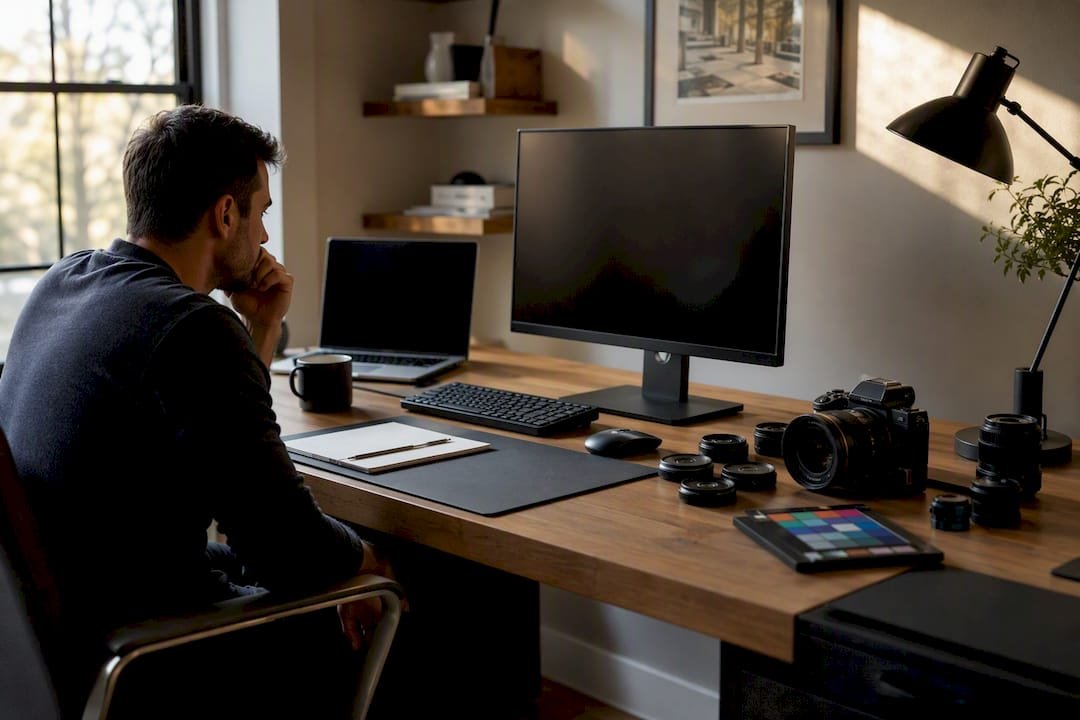
- Check editing consistency. Every image in a set should share the same white balance, exposure style, and perspective correction. Wide-angle lenses, a sturdy tripod, and HDR bracketing are standard equipment for MLS-ready images, so ask what gear they shoot with.
- Ask about turnaround and guarantees. Get a firm delivery window and ask what happens if you need a reshoot.
- Clarify licensing. Confirm you (or your agent) own full rights to use the images across MLS, social media, and print flyers.
- Request references. A quick call to a past client or agent reveals more than any polished sample gallery.
Pro Tip: Ask every candidate the exact same five questions in the same order. It’s the fastest way to spot who has a real workflow versus who is improvising.
Red flags worth walking away from: no property portfolio at all, no written turnaround commitment, reluctance to name equipment or editing software, and pricing so low it can’t cover professional-grade gear. The cheapest bid rarely delivers the gallery that gets a home noticed.
How Ryan Case Builds Photography Into a Full Listing Strategy
Photography is one piece of a larger system, not a standalone task. Inside the Premier Selling System, upgraded media, HDR photos, drone shots, twilight exteriors, or a 3D tour when the property calls for it, feeds directly into targeted digital ads, a Zillow Showcase listing, and outreach to the buyer database before a sign ever goes in the yard.
A listing with sharp, well-composed photography photographs like a completely different home than one with dim, crooked shots, even when it’s the exact same square footage. Sellers notice the difference in showing requests almost immediately.
That’s the argument for treating photography as marketing infrastructure, not a checkbox.
What the Research Actually Supports, and What Gets Overhyped
The data backs a simple case: photos are one of the cheapest, highest-leverage line items in a home sale. What gets overhyped is the idea that any single add-on, drone, twilight, 3D tour, is mandatory for every listing. It isn’t. A one-bedroom condo doesn’t need aerial shots of a parking lot.
What conventional advice underweights is turnaround time. Sellers fixate on price per shoot and skip past delivery guarantees, then lose a week of prime market exposure waiting on edited files. Ask about turnaround before you ask about the rate card.
Prioritize this order: hire someone with property-specific experience, confirm deliverables in writing, then decide on add-ons based on your actual home, not a package upsell. Photography works best when it’s the first domino in a full marketing plan, not a rushed afterthought before the sign goes up. Sellers who treat it that way, and who work with an agent who does the same at Ryancaserealtor, tend to see the difference in their first week on market.
Frequently Asked Questions
How much do professional real estate photos typically cost?
Standard shoots generally run $150 to $500 depending on home size and market, with add-ons like drone, video, or Matterport tours priced separately.
What are the best angles for listing photos?
Wide-angle shots taken from corners rather than doorways make rooms look larger and more accurate, while exterior shots typically work best straight-on with the whole facade in frame.
Do drone photos help every listing?
No. They add the most value on larger lots, waterfront homes, or properties near notable landmarks; smaller condos rarely see a meaningful return on aerial shots.
How long does it take to get photos back after a shoot?
Most photographers deliver edited images within 24 to 48 hours, with rush turnaround available for an extra fee.
Is virtual staging worth it instead of physical staging?
For vacant, move-in-ready homes, virtual staging is usually a lower-cost alternative that photographs convincingly; it’s less effective on rooms with awkward layouts or visible damage.
Sources
- Real estate photography | Matterport Learn
- Real Estate Photography is Essential For your Listing | Virtuance blog
- Real Estate Photography Pricing: 2026 Guide to Costs and Packages | TREMGroup
Pingback: Showing Feedback for Sellers: Turn Repeats Into Affordable Fixes