Before you unlock the door for a single visitor, secure valuables, hand access control to your agent through an electronic lockbox with one-time codes, and confirm a buddy or office check-in system for the sitting agent. Run a two-person sweep at the end of the event, and if your property is tenant-occupied, follow California’s notice rules. In wildfire-prone neighborhoods, know your exits and consider consulting One Day Doors & Closets in San Diego California for secure door hardware before strangers start walking through your living room.
TL;DR:
- Leaving valuables in plain sight is the primary cause of break-ins during open houses, making a thorough privacy sweep essential.
- Using off-site storage or logged safes for valuables, along with clear signage and strict access controls, can significantly reduce theft risk.
- Requiring visitors to sign in with detailed contact information and qualifying interest helps identify potential risks and creates a useful paper trail.
- Crowd management strategies, such as staggered entry and buddy systems, improve safety and prevent visitors from overwhelming the space.
- Exterior cameras are recommended for security, but interior recording should be disabled or clearly announced to avoid legal issues and visitor discomfort.
Table of Contents
- Open House Safety Checklist for San Diego Sellers
- How Do You Screen Open House Visitors?
- Managing Crowd Flow at a Busy Open House
- What Health Precautions Should San Diego Open Houses Follow
- Should You Use Security Cameras During an Open House?
- How Should Agents Communicate During a Showing
- Why Ryan Case Builds Safety Into Every Listing
- Want Your Open House Handled for You?
- Where to Verify These Rules
- Sources
- FAQ
Open House Safety Checklist for San Diego Sellers
Most break-ins and thefts tied to open houses trace back to one thing: someone left something valuable in plain sight. A thorough walk-through the night before matters more than any lock you install that morning.
Room-by-room privacy sweep. Go through every room like a stranger would. Jewelry, cash, firearms, and prescription medications need to leave the house entirely, not just move to a drawer. So do checkbooks, mail, sensitive documents, and anything with your Social Security number on it. Less obvious but just as risky: family calendars, diplomas with your name, computer logins left on screen, and a Wi-Fi password taped to the router. The NAR consumer guide on home selling safety treats this as a full identity-protection sweep, not just a theft-prevention step, since visitors can photograph personal details just as easily as they can pocket a ring.
Where to put small valuables. Off-site storage at a relative’s house or a safe-deposit box is the safest bet. If items must stay on the property, a keyed safe or an agent-managed lockbox beats hiding things in a closet. Whatever you choose, photograph and log serial numbers on jewelry, electronics, and collectibles before the open house, so you have a record if something goes missing.
Signage and photo policy. Post a simple “no photography without permission” notice near the entry, and have your agent mention it verbally as people sign in. Unauthorized photos of interior layouts, alarm panels, or personal items can end up circulating far beyond a buyer’s phone.
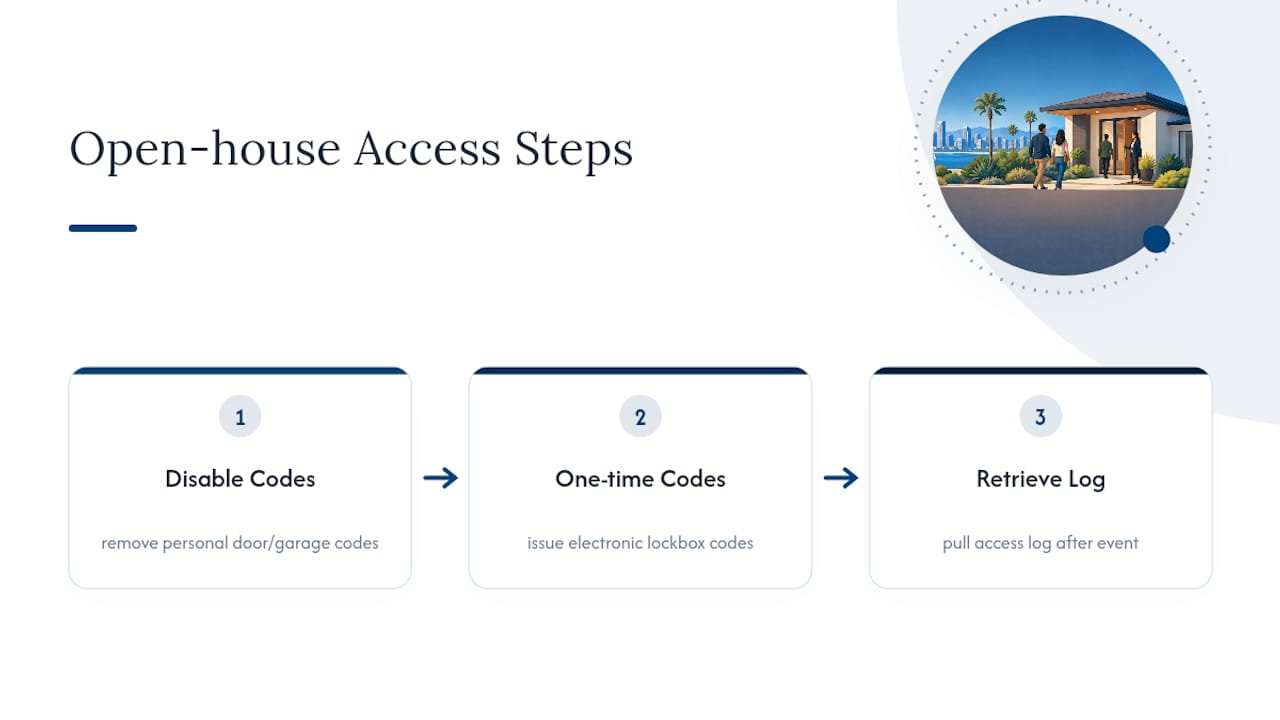
Access control. Disable any personal door or garage codes tied to your name before the first showing. Electronic lockboxes let only licensed professionals in and log exactly who entered and when, which beats a combination lock every time. Ask your agent to generate one-time codes for the open house window and to pull the access log afterward.
Pro Tip: Keep a printed inventory sheet with photos of anything valuable that stays in the house, and text it to your agent before the open house starts. If anything looks different afterward, you already have your evidence.
How Do You Screen Open House Visitors?
Sign-in sheets aren’t just a marketing tool that captures leads for your agent’s buyer database. They also create a paper trail of who was in your home and when, which matters if anything turns up missing later.
Ask your agent to require name, phone number, and email before anyone tours past the entryway, and to flag visitors without a real estate agent for a quick, casual conversation about financing or timeline. That conversation isn’t interrogation. It’s a normal part of qualifying interest, and it happens to surface odd behavior early. Agents who work San Diego open houses regularly develop a feel for who’s there to buy versus who’s there for another reason entirely, whether that’s curiosity about the neighborhood or something less benign.
Pre-marketing an open house to your agent’s existing buyer database, rather than relying only on drive-by signage, tends to bring in a more qualified crowd from the start. It also gives you a rough headcount ahead of time, which helps with the flow planning in the next section. If your neighborhood has had reports of theft rings targeting open houses, tell your agent. Some agents adjust screening intensity based on recent local activity, tightening sign-in requirements when warranted.
Managing Crowd Flow at a Busy Open House
A packed open house looks great for momentum but creates real blind spots. When ten people are moving through a house at once, it becomes much harder for a single agent to track who’s where.
Staggering entry helps. Some agents let small groups in every few minutes rather than opening the floodgates at the listed start time, especially for smaller homes where hallways and bedrooms create bottlenecks. Roping off areas that aren’t part of the tour, like a garage full of moving boxes or a home office with a locked filing cabinet, keeps foot traffic contained to rooms that have already been swept for valuables.
For homes expecting heavy turnout, a second person on-site isn’t optional. One agent greets and manages sign-in at the door while the other moves through the house with visitors, which mirrors the buddy system NAR recommends for open house safety generally. Parking matters too. San Diego streets in older neighborhoods like North Park or Kensington often can’t handle overflow parking, so ask your agent to note safe parking areas in the listing or on signage, both to avoid citations for visitors and to keep sightlines to the house clear.
If the crowd genuinely outpaces the space, a brief pause on new entries at the door, with a short wait outside, beats letting the house get so full nobody can move.
What Health Precautions Should San Diego Open Houses Follow
Formal COVID-19 mandates for real estate showings have expired across San Diego County, but plenty of sellers and visitors still appreciate basic courtesies. Hand sanitizer near the entry costs almost nothing and signals that you’ve thought about it.
Good ventilation helps regardless of any specific illness going around. Opening windows and running ceiling fans before visitors arrive, weather permitting, keeps air moving through a house that will have a steady stream of people in and out for a few hours. It also happens to reduce that closed-up smell that lingers in a house that’s been staged and locked for showings.
Some agents still ask visitors who are visibly sick to reschedule a private showing instead of joining a crowded open house, which protects other buyers and the seller’s family if they’re still living in the home during the listing period. This isn’t about reviving old mandates. It’s just good sense when you’ve got dozens of strangers moving through tight hallways and bathrooms over a few hours. If your household includes someone with a compromised immune system, it’s worth having an honest conversation with your agent about whether a fully open format makes sense or whether appointment-only showings serve you better.
Should You Use Security Cameras During an Open House?
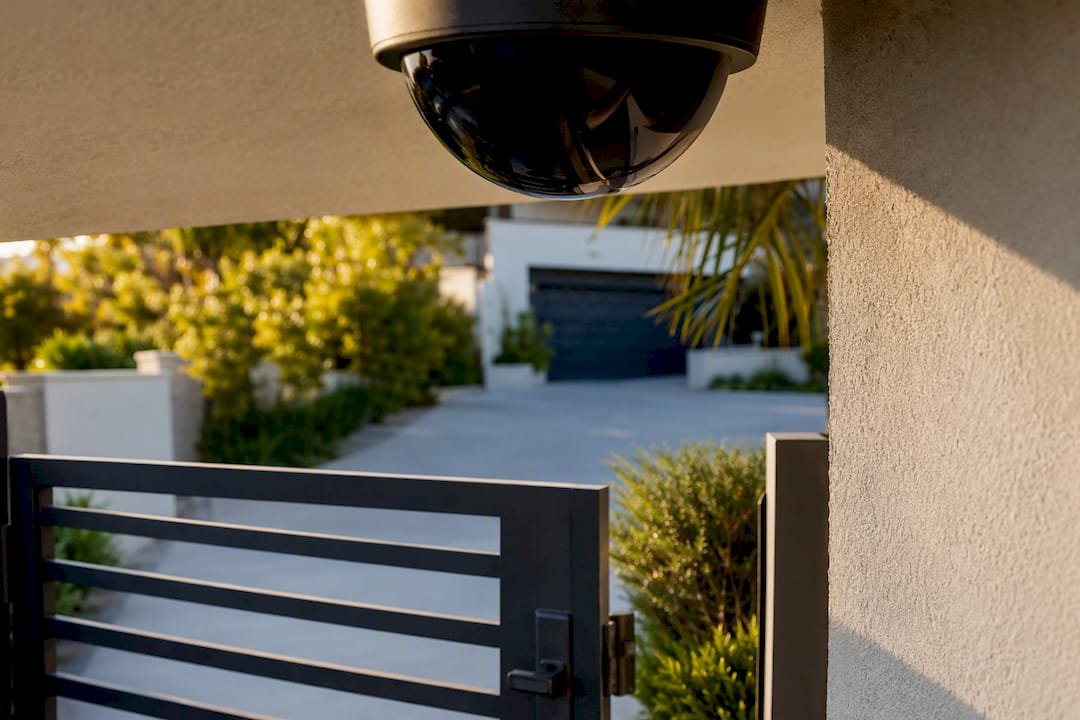
Exterior cameras covering the driveway, front door, and any side gates are worth running during an open house, and most San Diego homes already have some version of a doorbell camera or driveway system installed. Exterior footage also tends to be less legally sensitive than anything recorded inside the house.
Interior cameras are trickier. California is a two-party consent state for audio recording, which means an active microphone capturing conversations without visitor knowledge can create legal exposure. If you have indoor cameras, disable audio recording for the open house window, or post clear signage that recording is in use so visitors have notice. Video-only recording of common areas is generally lower risk, but check with your agent about your specific system and any HOA rules that might apply if you’re in a managed community.
Whatever you choose, resist the urge to physically stake out the house yourself. It’s uncomfortable for buyers to feel watched by the seller lurking nearby, and it defeats the purpose of having a listing agent manage the event professionally.
How Should Agents Communicate During a Showing
The agent hosting your open house should have their phone on and reachable, but not glued to a screen while visitors are touring. NAR’s open house guidance frames the closing minutes as the most vulnerable stretch of the entire event, and that’s exactly when a distracted agent creates risk.
A short check-in text to the brokerage office at the start and end of the showing gives someone else a timestamp of when the agent arrived and when they left. If something goes wrong, that record matters. For a two-agent setup, a quick code phrase or text signal, something as simple as “heading to the kitchen,” keeps both people oriented to who’s covering which part of the house without shouting across rooms in front of buyers.
Emergency alerts matter too, particularly given San Diego’s earthquake and wildfire exposure. Agents working listings in fire-prone canyons or foothill communities should have AlertSanDiego notifications active on their phone during any showing, not just checked once that morning. If an evacuation notice comes through mid open house, a calm, immediate announcement beats waiting until visitors notice sirens outside.
Why Ryan Case Builds Safety Into Every Listing
Safety planning isn’t an add-on to marketing a house well. It’s the same discipline that goes into pricing strategy and buyer outreach under the Premier Selling System: control the variables, document the process, and don’t leave outcomes to chance.
That means confirming who’s hosting an open house and under what brokerage’s insurance coverage, the exact question the California DRE’s 2025 guidance tells sellers to ask before agreeing to a broker sitting arrangement. It means pre-marketing to a qualified buyer database rather than hoping foot traffic sorts itself out, and it means a documented lockbox and access log on every listing.
One recent San Diego listing had heavy weekend traffic from an active buyer pool, and a two-agent open house with staggered entry and a logged lockbox kept the event orderly through to a fast, clean close. No incidents, no surprises. That’s the goal every time, not just the exception.
— Ryan Case
Want Your Open House Handled for You?
If you’d rather not manage screening, lockbox codes, and buyer flow yourself while also trying to sell your house for top dollar, that’s exactly what full-service representation is for. Ryan Case’s Premier Selling System puts an experienced agent in charge of every open house detail: access control, visitor sign-in, buddy coverage, and the closing sweep, so you’re not the one standing in your own doorway wondering who just walked in.

Full-service listing makes the most sense for sellers who want a professional handling access and screening from the first showing through closing, rather than juggling it themselves on top of moving logistics. For sellers who want price certainty on top of that safety net, the guaranteed home sale program removes even more uncertainty from the timeline. And if your open house strategy needs a full rework, from signage to buyer targeting, the open house strategy guide breaks down exactly how Ryan Case runs these events for San Diego sellers. Reach out to request a safety and marketing plan built around your specific property and neighborhood.
Where to Verify These Rules
For direct guidance, consult the NAR consumer safety guide, NAR’s open house resource, the California DRE’s 2025 update on broker sittings, California Civil Code section 1954 on tenant entry notice, and San Diego County’s emergency preparedness plan.
Sources
- Consumer Guide: Home selling tips for privacy and safety — NAR
- Understanding Open House Broker Sittings — California DRE (2025)
- California Civil Code §1954 — Entry to dwelling unit by landlord
- My Disaster Plan — San Diego County OES
FAQ
What should I remove from my house before an open house?
Take jewelry, cash, firearms, prescription medications, checkbooks, and sensitive documents off-site entirely. Also clear mail, family calendars, diplomas, and anything showing your Wi-Fi password or computer logins, since identity clues create risks that outlast the open house itself.
Do I need to notify tenants before an open house?
Yes. Under California Civil Code section 1954, landlords showing an occupied unit generally must give reasonable written notice, and 24 hours is presumed reasonable outside of emergencies or tenant consent. For a full walk-through of coordinating showings with tenants in place, see this guide to selling with tenants in California.
Is it safe to let another agent host my open house alone?
Only if you’ve confirmed who they represent and what insurance covers the showing. The California DRE’s 2025 guidance flags agency and liability questions that can arise when an unaffiliated broker sits your listing without clear documentation.
How does Ryan Case handle open house safety for sellers?
Some listing services build screening, lockbox access logs, and buddy coverage into every open house rather than treating safety as an afterthought. Pricing for listing services is available directly through Ryan Case’s site.
What San Diego-specific hazards should sellers plan for?
Wildfire and earthquake risk both matter locally. San Diego County recommends registering for AlertSanDiego, marking exits, and knowing utility shutoffs before hosting visitors, especially in canyon or foothill neighborhoods.