A virtual open house is a live or on-demand online tour that lets buyers walk a listing remotely, ask questions in real time, and get spatial context without driving anywhere. It belongs in every listing’s marketing plan, not just the ones stuck with a rough sale timeline. Combine a live session with a recorded or 3D version, and you widen your buyer pool while cutting wasted in-person showings.
TL;DR:
- Nearly half of recent buyers find virtual tours very useful, yet only about 16 percent of agents currently offer them, creating a significant market opportunity.
- Combining live, recorded, and 3D tours caters to different buyer preferences and often yields better engagement than using a single format alone.
- Proper preparation, including property staging, equipment testing, and thorough rehearsals, is critical to hosting a successful virtual open house.
- Tracking engagement metrics such as attendance rate, watch time, and follow-up actions helps evaluate and improve virtual open house performance.
- Virtual open houses are especially effective for listings with strong spatial appeal, open layouts, or outside-the-area buyers, while in-person visits remain essential for emotional or physical appeal.
Table of Contents
- What Are the Different Types of Virtual Open Houses?
- Is a Virtual Open House Worth It for Your Listing?
- What Equipment and Platforms Do You Need?
- How Do You Host a Virtual Open House Step by Step?
- How Do You Promote a Virtual Open House to Maximize Attendance?
- What Technical Problems Should You Plan For?
- What Metrics Actually Prove a Virtual Open House Worked?
- How Does Ryan Case Use Virtual Open Houses in the Premier Selling System?
- When Should You Actually Prioritize a Virtual Open House?
- Get Help Running a Virtual Open House That Actually Converts
- Sources
- FAQ
What Are the Different Types of Virtual Open Houses?
Most virtual property tours fall into four categories, and picking the wrong one wastes both your time and your seller’s money.
Live-streamed video tours put an agent on camera, walking through the home in real time on platforms like Instagram Live, Facebook Live, or Zoom. Buyers ask questions on the spot, which builds trust fast but leaves zero room for editing mistakes. Pre-recorded walkthroughs get filmed once, edited for pacing and music, then posted anywhere: the MLS, YouTube, social feeds. They look polished but can’t answer a buyer’s specific question about closet depth or HOA rules. 3D interactive tours let a viewer click through room to room on their own schedule, controlling pace and angle. Hybrid formats combine a scheduled live Q&A with an always-available 3D or recorded tour link, giving buyers a choice between structure and self-service.
- Live streams work best for move-in-ready homes with strong curb appeal and an agent comfortable improvising on camera.
- Pre-recorded tours suit vacant staged homes or listings where you want full control over lighting and narration.
- 3D interactive tours fit larger or unusually laid-out homes where buyers need to understand flow before committing to a showing.
- Hybrid setups make sense for higher-price listings where you want both immediate engagement and long-tail lead generation.
Combining formats, live for interaction, recorded for polish, 3D for immersion, tends to outperform betting on just one, since different buyers process a home differently depending on how much time and technical comfort they have.
Is a Virtual Open House Worth It for Your Listing?
Buyer demand backs this up more than most agents realize. The National Association of Realtors’ 2024 buyer and seller data shows nearly half of recent buyers rate virtual tours as very useful during their home search, yet only about 16 percent of agents actually offered one, according to figures compiled in Matterport’s virtual open house playbook. That gap between what buyers want and what agents deliver is a real opportunity for any seller trying to stand out in a crowded MLS feed.
A separate finding from earlier research indicated a substantial portion of homebuyers wanted virtual tours included in listings as far back as 2021, meaning this preference has been building for years, not months.
Virtual open houses also solve practical problems: out-of-area buyers, relocation clients, and investors who can’t tour every property in person all get a real look without booking a flight. They lower the physical wear on a home during a busy listing period and let sellers avoid staging for strangers every weekend.
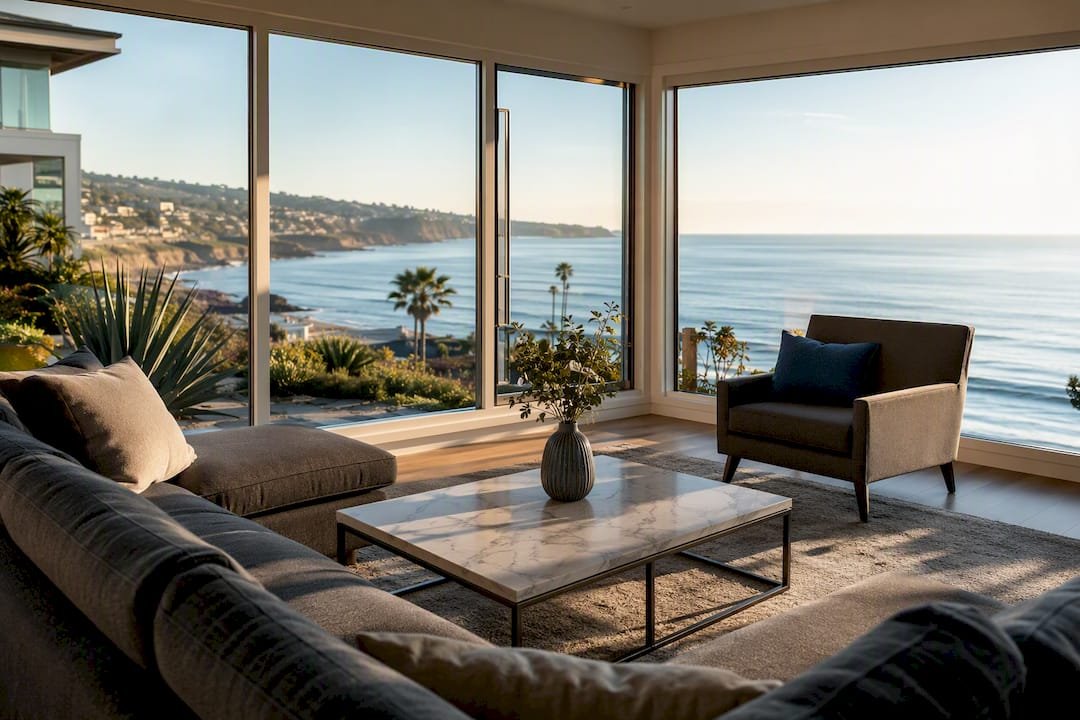
In-person open houses still win when a property’s emotional appeal depends on being physically present, think ocean views, a backyard built for entertaining, or a kitchen that smells like fresh paint and possibility. Use both when the budget allows.
What Equipment and Platforms Do You Need?
Running a professional virtual open house doesn’t require a production studio, but it does require the right combination of tools and people.
Platform categories break down into four buckets. Video streaming platforms (Zoom, Facebook Live, Instagram Live) handle live interaction cheaply but offer limited polish. Social live tools reach the widest casual audience but cap production quality. 3D hosting platforms like Matterport or Cavoss let buyers self-navigate a space on their own time. Webinar and event platforms, the kind used for admissions events according to Guidebook’s virtual event glossary, add registration forms, breakout rooms, and built-in analytics that basic livestream tools lack.
Minimum equipment for a credible tour includes a camera capable of stable 1080p video, a shotgun or lavalier microphone (audio quality matters more than video resolution for viewer retention), a small lighting kit or reliance on strong natural light, a gimbal or tripod for smooth movement, and upload speeds fast enough to avoid buffering mid-stream.
Staffing for a live event works best with four roles split across people, not stacked onto one agent:
- A host who narrates the walkthrough and keeps energy up
- A chat moderator who answers questions in real time without interrupting the host
- A tech producer who monitors stream quality and troubleshoots on the fly
- A follow-up owner who logs every lead the moment the event ends
Cost signals vary widely by ambition. Basic interactive tours can run as little as a one-time $39 setup with 24-hour turnaround, according to pricing listed by Cavoss, while professional 3D capture with features like sun-path simulation costs considerably more and takes longer to schedule and produce.
How Do You Host a Virtual Open House Step by Step?
A virtual open house succeeds or fails based on prep work most agents skip. Here’s the sequence that actually converts attendees into showings.
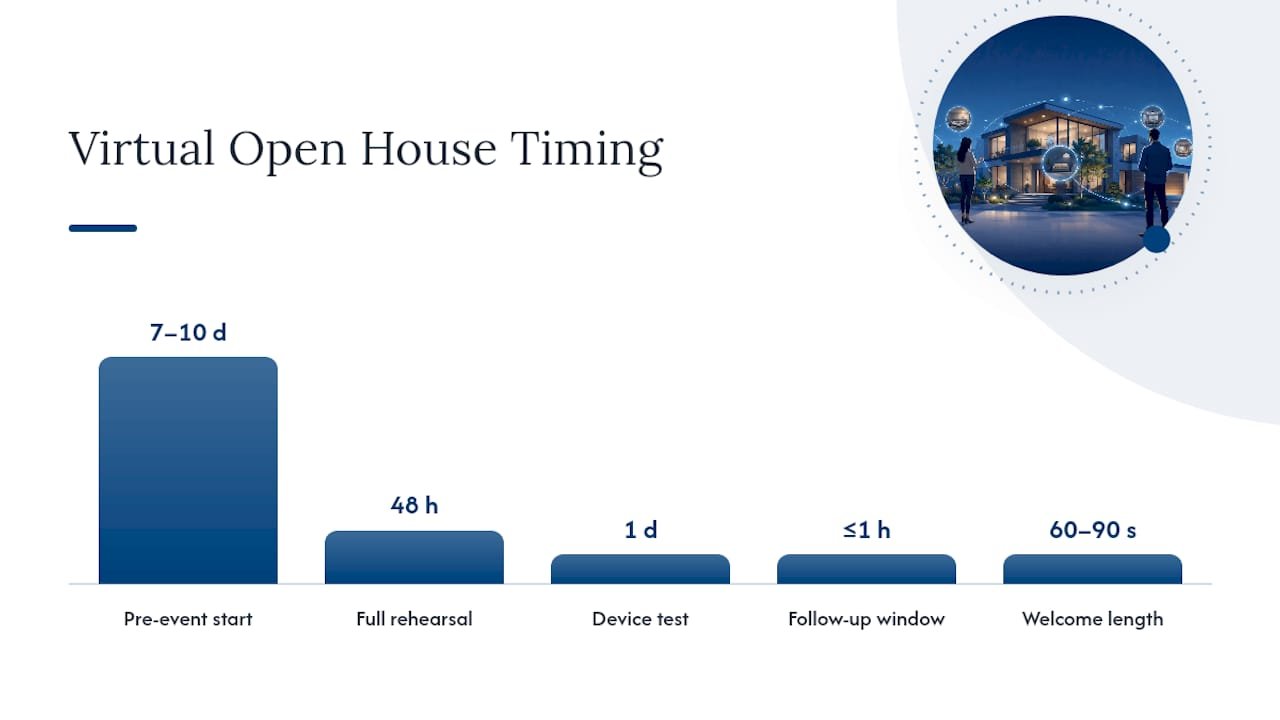
Pre-event (start 7 to 10 days out):
- Prep the property exactly as you would for an in-person open house: declutter, deep clean, stage key rooms.
- Capture your visual assets, live-tour rehearsal footage, 3D scan, or pre-recorded walkthrough, at least a week before the event.
- Build a registration page that captures name, email, phone, and one qualifying question like “Are you working with an agent?”
- Schedule at least one full rehearsal, ideally 48 hours before the live event, to test pacing, camera angles, and Wi-Fi stability, a timeline Guidebook’s event best practices recommend across virtual event types.
- Test every device, camera, microphone, and streaming app, the day before, not the morning of.
During the event:
- Open with a 60 to 90 second welcome that states the address, price, and what viewers will see.
- Break the walkthrough into short segments, kitchen, primary suite, backyard, each running under five minutes to hold attention.
- Build in a live Q&A block after the walkthrough rather than fielding questions mid-tour, which breaks pacing.
- Repeat your call to action, “book a private showing” or “request the disclosure packet”, at least twice during the session.
- Have your chat moderator answer every question within two minutes; silence in the chat kills momentum fast.
Post-event (within 24 hours):
- Send the recording link to every registrant, whether they attended live or not.
- Follow up with attendees within one hour with a personal message referencing something specific they asked.
- Send a 24-hour follow-up offering a private showing slot or additional photos.
- Log every engagement data point, watch time, questions asked, CTA clicks, into your CRM before the details fade.
Pro Tip: Assign the chat moderator and follow-up roles to two different people before the event starts. Agents who try to do both during a live stream lose leads simply because they’re too busy narrating to respond fast enough.
How Do You Promote a Virtual Open House to Maximize Attendance?
Registrations don’t happen by accident. They come from a channel mix that starts two weeks out and intensifies as the event approaches.
- Feature the event prominently in your MLS listing description with the date, time, and registration link.
- Email your buyer database and past-client list with a direct invite, not just a generic “new listing” blast.
- Run targeted paid social ads to buyers searching your ZIP code or school district, starting five to seven days before the event.
- Reach out to cooperating brokerages and agents with active buyers matching the price point.
- Post in local community groups and neighborhood forums where the home’s target buyer actually spends time.
Weeknight evenings and Sunday afternoons tend to draw the strongest turnout, since weekday mornings compete with work schedules. State the time zone explicitly in every promotion; a “7 PM” invite means nothing to an out-of-state buyer without it.
Short teaser clips, fifteen to thirty seconds showing the best room or view, consistently pull higher registration-to-attendance conversion than a static flyer, a pattern Cavoss’s tour marketing guidance points to directly. Pair those clips with a floor plan marketing graphic so buyers understand layout before they even click join. Track cost-per-registration on paid ads early; if it climbs past what a single showing appointment is worth to the seller, shift the budget toward organic promotion instead.
What Technical Problems Should You Plan For?
Test your upload speed at least 24 hours before going live; anything under 10 Mbps upload risks buffering on a live stream. Favor mobile for live streams shot handheld and desktop-connected cameras for anything requiring a stable tripod setup. Audio quality matters more than video resolution: viewers tolerate grainy footage but abandon a stream within seconds of garbled sound. Shoot toward natural light when possible, keep camera movement slow and deliberate, and avoid walking backward through doorways.
Always have a backup plan. Keep a pre-recorded version ready to post immediately if your live stream fails, have a second host on standby with their own connection, and offer a phone dial-in option for buyers with unreliable internet. Add captions to recorded tours and give viewers clear on-screen navigation cues, room labels, arrows, so anyone watching without sound still follows along.
Pro Tip: Run your rehearsal on the exact device and network you’ll use for the live event, not a different laptop with better Wi-Fi. Conditions change, and testing on the wrong setup gives you false confidence.
What Metrics Actually Prove a Virtual Open House Worked?
Track four numbers after every event: registration-to-attendance rate, average watch time, CTA or booking click rate, and total private showings scheduled within a week. A healthy event typically sees a large share of registrants actually show up live, with the rest watching the recording later, so don’t write off no-shows as lost leads.
Capture leads through the registration form itself, live chat responses (anyone who asks a question is warmer than a silent viewer), and a scheduling link dropped directly into the chat during the Q&A. Some platforms now pair virtual tours with automated agents that answer buyer questions 24/7 and keep momentum going after the event ends, an approach Tour uses to reduce lead drop-off when a human host isn’t available.
- Within 1 hour: personal thank-you referencing their specific question, plus a showing-slot offer.
- Within 24 hours: recording link, additional listing details, disclosure packet if requested.
- Within 3 to 7 days: a check-in message gauging interest level and, if warm, a direct private-showing invite.
Feed every engagement data point into the listing’s broader open house strategy rather than treating the virtual event as a standalone effort.
How Does Ryan Case Use Virtual Open Houses in the Premier Selling System?
Virtual open houses slot directly into a specific stage of the Premier Selling System: the window right after professional photography and before the first weekend of showings. That’s when floor-plan marketing and a 3D or live walkthrough do the most work, giving out-of-area buyers a reason to register before ever driving to the property.
An engagement system captures interest signals during virtual events, including questions asked and time spent on specific rooms, and feeds them into the buyer pipeline, so leads are followed up promptly. For listings where layout or natural light is the selling point, that’s where investing in professional 3D capture pays off over a DIY phone walkthrough.
Homeowners weighing whether to handle capture themselves or hand it off should know the tradeoff is mostly about time and confidence on camera, not cost.
When Should You Actually Prioritize a Virtual Open House?
Homes with strong spatial appeal, open layouts, unusual square footage, view lots, benefit most from a virtual open house because buyers need to understand flow before they’ll book an in-person visit. Cosmetic fixer-uppers or homes that rely on emotional first impressions, like a dramatic entry or backyard, get less mileage from video and more from foot traffic.
My rule of thumb: if a listing draws relocation buyers, investors, or anyone outside a 30-minute drive, run a virtual open house every time. If the buyer pool is hyperlocal and price point is entry-level, a strong in-person event alone often does the job. Either way, the follow-up sequence matters more than the format you pick.
— Ryan Case
Get Help Running a Virtual Open House That Actually Converts
Most agents treat a virtual open house as an afterthought bolted onto a regular listing, one shaky phone video and a Facebook post. Ryan Case builds it into the marketing plan from day one: professional capture, floor plan visuals, targeted promotion to the right buyer pool, and a follow-up sequence that turns virtual attendees into scheduled private showings instead of cold leads that go nowhere.

That structure is part of the broader floor plan marketing approach used across every listing in the Premier Selling System, pairing spatial context with the kind of targeted outreach that gets qualified buyers registered before the event even starts. If you’re weighing whether your next listing needs a virtual component, request a home marketing consultation and get a plan built around your property’s specific layout, buyer pool, and timeline.
Sources
- How to Host a Virtual Open House 2025 Playbook | Matterport
- What is a Virtual Open House? | Guidebook
- Interactive Property Tours — Cavoss
- 2024 Profile of Home Buyers and Sellers highlights | NAR (PDF)
FAQ
What Is a Virtual Open House?
It’s a live or pre-recorded online tour that lets buyers explore a listing remotely, ask questions, and get spatial context without visiting in person.
Are Virtual Open Houses Worth It?
Yes, for most listings: nearly half of buyers in NAR’s 2024 data rate virtual tours as very useful, yet few agents actually offer one, leaving real room to stand out.
How Much Does a Virtual Tour Cost?
Basic interactive tours can start around a one-time $39 setup with next-day delivery, according to Cavoss’s pricing, while professional 3D capture with advanced features costs more depending on the provider and property size.
Is There an App for Open Houses?
Yes: platforms range from live-streaming apps like Zoom and Instagram Live to dedicated 3D tour and event platforms that add registration, chat, and analytics features built specifically for property tours.
Should I Combine a Live Stream With a Recorded Tour?
Combining formats works better than relying on one: a live session builds real-time trust while a recorded or 3D version keeps generating leads for buyers who couldn’t attend.